
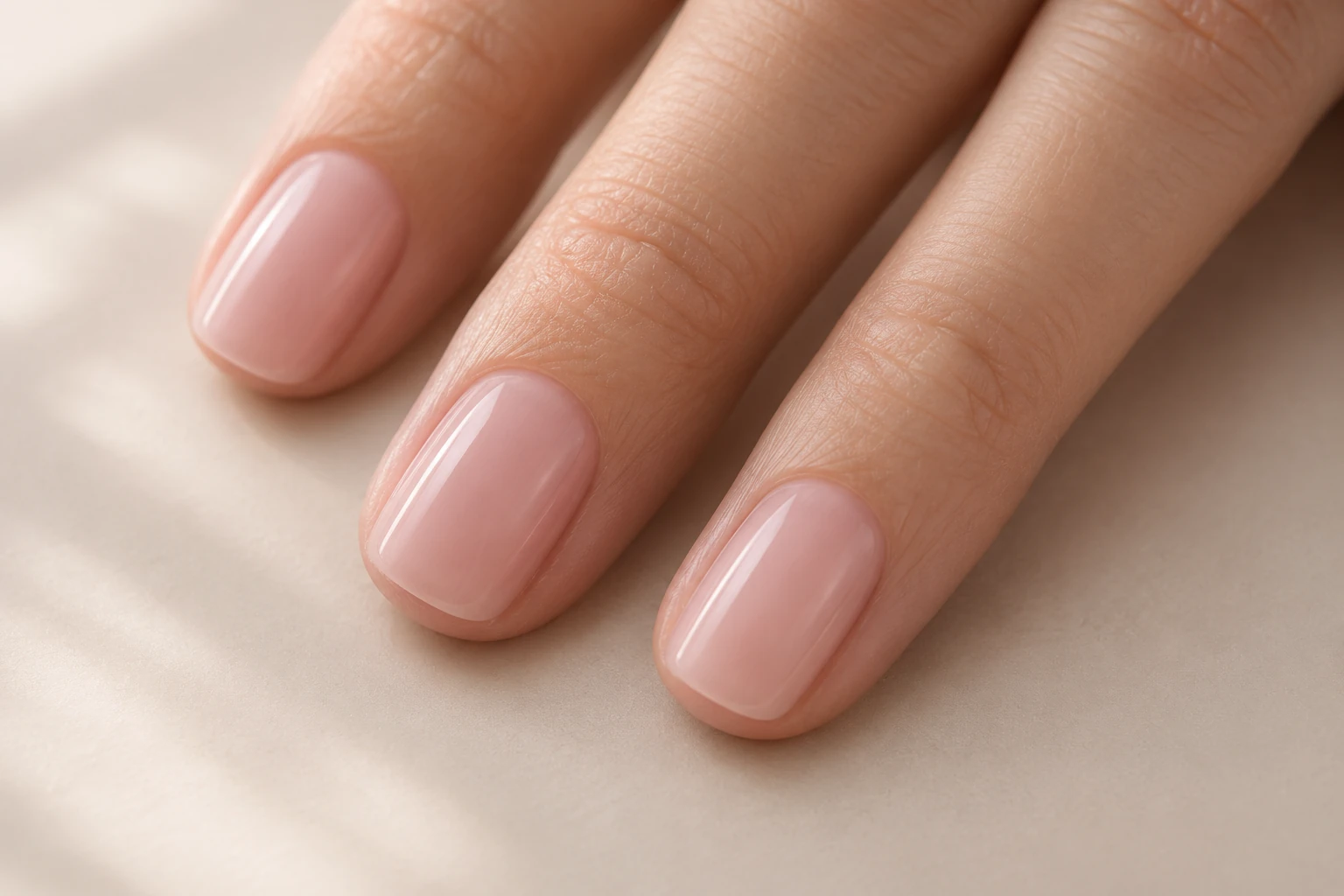
Two sets of press-on nails can look similar in the box and feel quite different on your hands. One bends easily; another feels firm. A thin, simple design may feel lighter than a set covered in raised decorations.
Press-on nail bodies can be made from molded plastic, such as ABS, or formulations described as soft gel. Color coatings, protective finishes, and decorations add to the finished nail. The adhesive that holds it in place is a separate component.
Knowing which part a product description refers to makes shopping a little easier, especially when words like “gel” appear on the packaging.
The parts of a press-on nail
A press-on may have several layers, each with a different job.
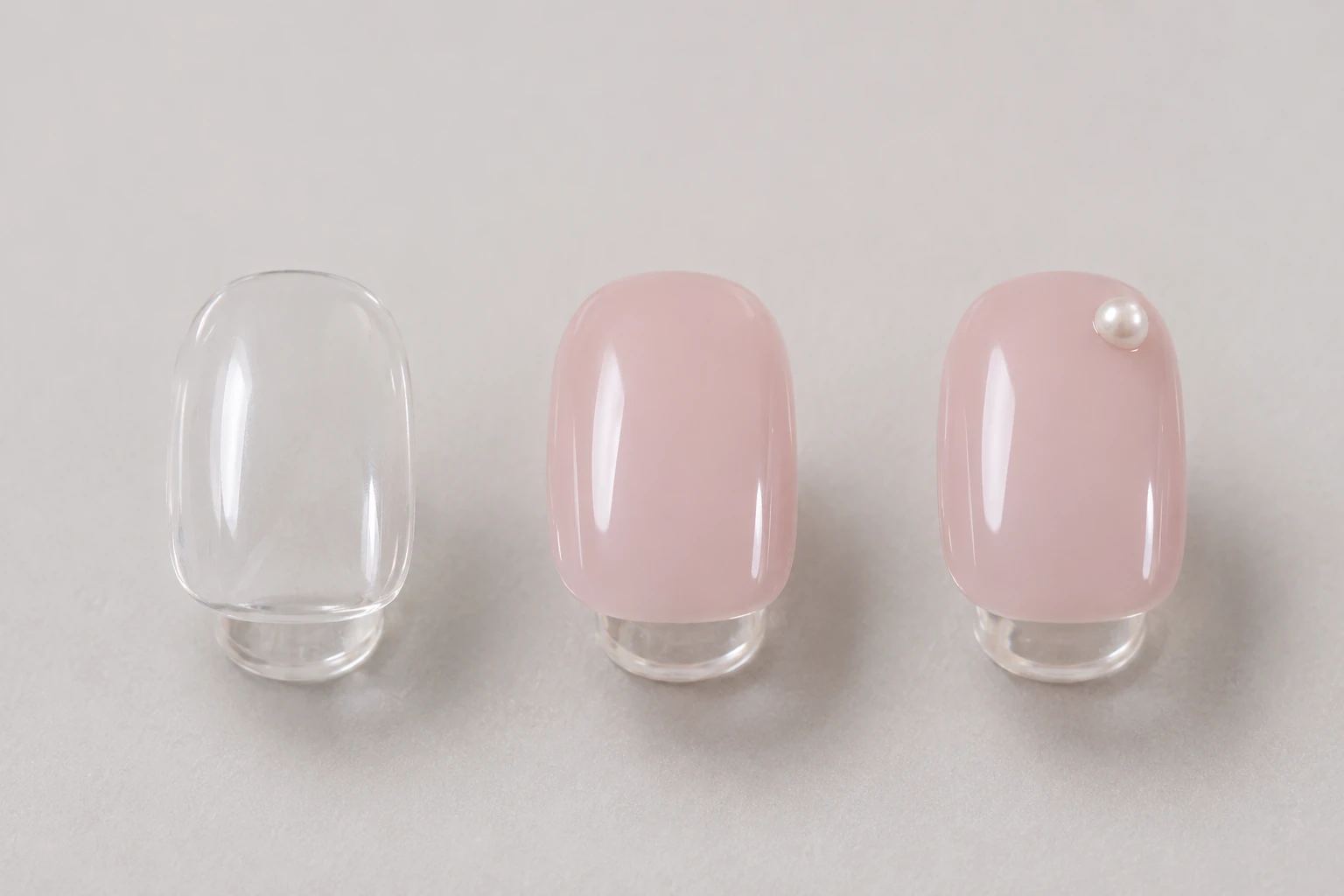
Nail bodyThe preformed shell
Surface coatingColor & glossy finish
DecorationA pearl attached on top
| Component | What it does | What to check |
|---|---|---|
| Nail body | Provides the shape and structure | Material, width, curve, and thickness |
| Color and artwork | Creates the visible design | Coverage, detail, and consistency |
| Surface finish | Gives the nail its gloss or texture | Smoothness and surface condition |
| Decorations | Add raised shapes or embellishments | Height, weight, edges, and attachment |
| Adhesive | Attaches the press-on to your natural nail | Application and removal instructions |
A plain colored set may have a much simpler construction than one with sculpted flowers or attached stones. Even when the base material is the same, the finished nails can feel different.
What is ABS plastic?
ABS stands for acrylonitrile butadiene styrene, a moldable plastic used to make preformed nail tips.
An ABS label identifies the base material. It doesn’t tell you the nail’s thickness, how deeply it curves, or how its edges have been shaped. Those details help explain why two sets made from the same material may fit differently.
Before applying adhesive, rest a press-on over your natural nail. Check whether it covers the nail comfortably and follows its curve without needing substantial pressure. Look at the cuticle edge, too: it should sit neatly without pressing into the surrounding skin.
The material description is useful, but you’ll still need to check the finished shape against your own nails.
What does “soft gel” mean?
Some preformed nails use formulations described as soft gel. The exact composition varies, so check whether the description applies to the nail body, its coating, or simply its appearance.
| Wording on a product | What you need to find out |
|---|---|
| Soft gel nail tips | What the body is made from and which application system it requires |
| Gel-coated nails | What material is underneath the coating |
| Gel-effect or gel-look nails | Whether “gel” describes only the appearance |
| UV/LED gel adhesive | Which nails and curing equipment the adhesive is designed to work with |
A glossy gel-effect finish and a soft gel nail body are different features.
Are press-ons the same as acrylic nails?
Press-ons arrive already shaped. You attach the finished nail to your natural nail.
Traditional liquid-and-powder acrylic enhancements are formed through a different process. The FDA describes these systems as involving reactions between acrylic monomers and polymers. FDA: Nail Care Products ↗
If a listing says “acrylic press-ons,” look for a more specific material description. That phrase alone doesn’t explain whether the nail was molded, sculpted, coated, or made through another process.
Why do some nails feel thicker or more flexible?
The base material contributes to how a nail feels. Its shape and decorative layers also play a part.
A nail with several layers of artwork and raised embellishments may feel more substantial than a simple design made on the same base. Length, width, and curvature can affect how it bends.
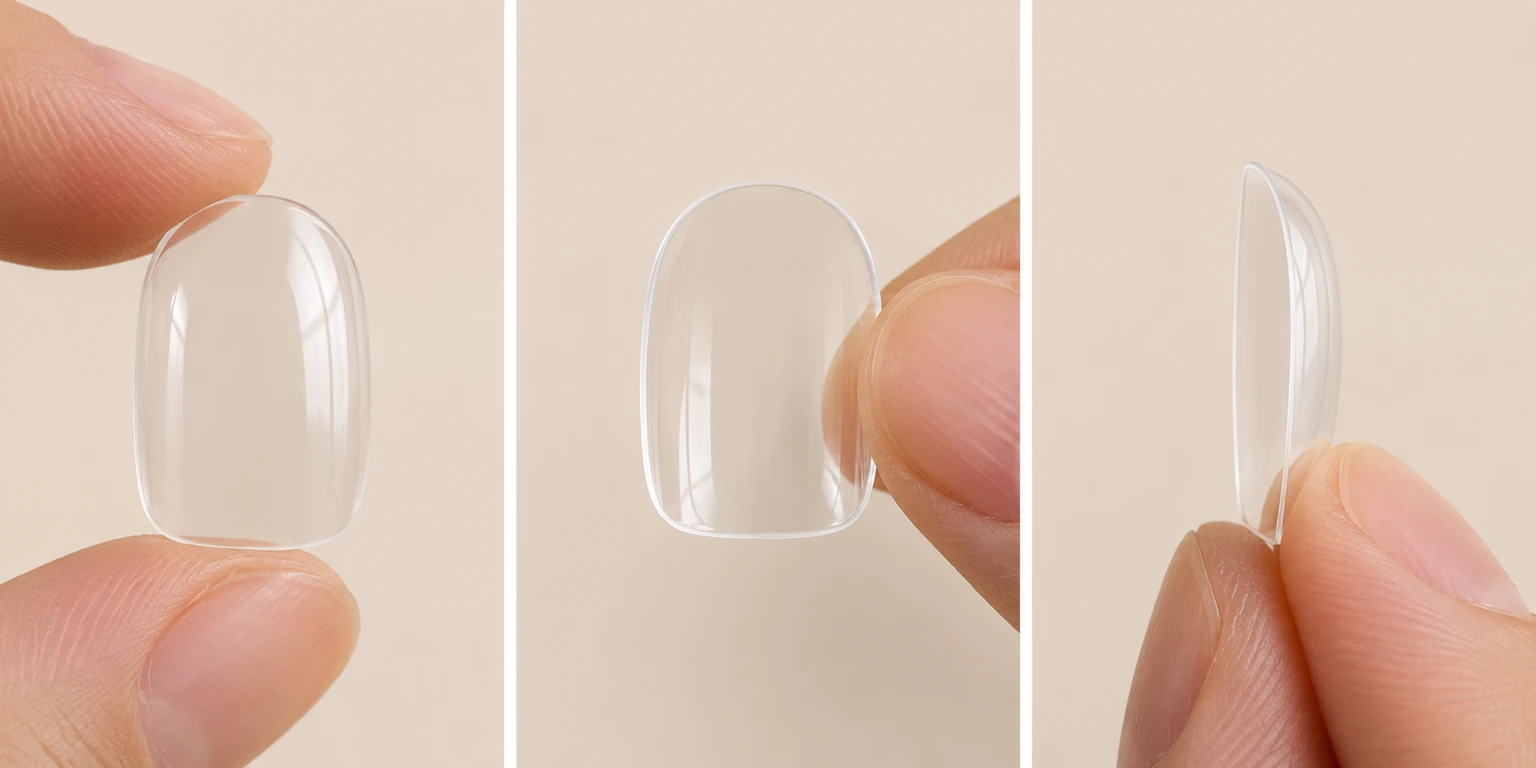
FrontOverall outline
UndersideThe inner curve
SideArch & edge thickness
Thinness alone isn’t a sign of poor quality, and thickness doesn’t guarantee strength or comfort. Look at the construction and try the fit before applying adhesive.
If a nail’s width seems right but it feels awkward, check its curve and cuticle shape. Choosing a softer material won’t necessarily solve a mismatch in those areas.
What about chrome, cat-eye, and 3D nails?
These terms describe the design or visual effect. They don’t identify the material underneath.
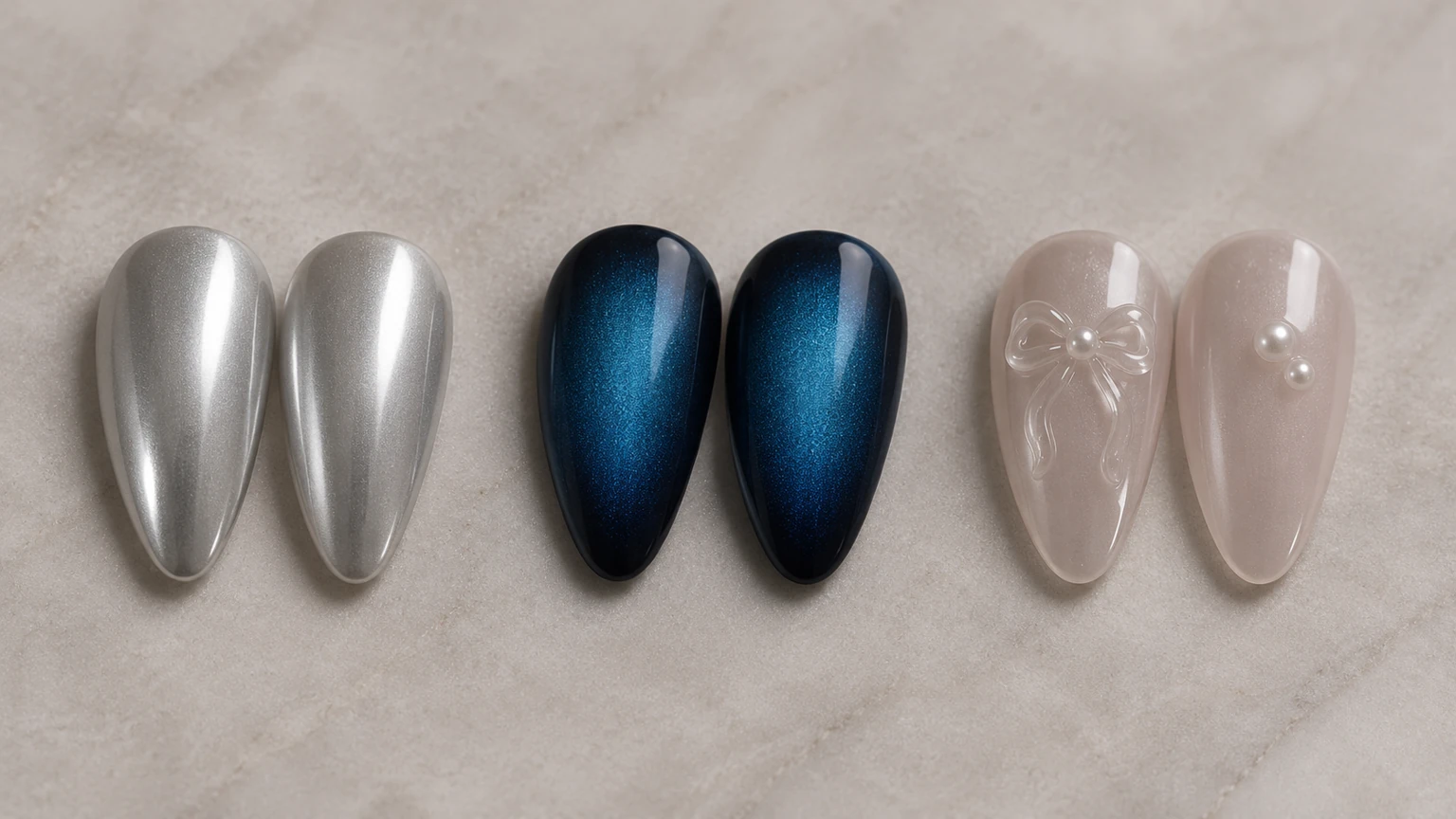
Chrome finishes
“Chrome” describes a reflective, metallic-looking surface. It doesn’t establish that the nail body is metal or tell you how the finish was produced.
Close-up photographs can help you judge the coverage and condition of the surface, including around the edges.
Cat-eye effects
Cat-eye designs have a light-catching appearance often created with magnetic nail coatings. Because the effect changes with movement and lighting, a still photograph may show only part of it.
If that shifting appearance is what you love about a set, look for a moving video under ordinary lighting.
Raised decorations
Flowers, bows, and other raised designs may be sculpted from nail-art materials or attached as separate pieces.
Descriptions such as “crystal,” “pearl,” and “gold” don’t confirm a specific composition. Check the material details if they matter to your choice.
For everyday wear, look at the decorations from the side. Their height, placement, and edges can help you decide whether the set will suit your routine.
Does the material determine whether a set is reusable?
Reuse also depends on the adhesive, removal method, finish, and condition of the nail afterward. Check the care instructions before buying a set for repeated wear.
After removal, inspect both sides of each nail. Watch for cracks, distortion, peeling finishes, loose decorations, or adhesive buildup that prevents a suitable fit.
A nail may look fine from the front while its underside needs attention. No material name guarantees a fixed number of wears, and forcing a nail off to save it can damage your natural nail.
Is one material automatically safer?
A base material label can’t tell you how you’ll respond to the whole nail system. Adhesives, coatings, preparation products, and removers also deserve attention.
The American Academy of Dermatology recommends knowing which products are used in artificial nails and advises against covering existing nail problems with them. AAD: Manicure and Pedicure Safety ↗
If you have a known allergy to a nail-product ingredient, ask for the relevant ingredient information. Words such as “gentle” and “salon quality” don’t answer that question.
What to check before buying
Once a design catches your eye, check the product details:
- Does the material description identify the nail body or only its finish?
- Are suitable sizes, lengths, and shapes available?
- Will the raised decorations suit your daily activities?
- Are application and removal instructions clear?
- If you want to wear the set again, are reuse instructions provided?
It’s worth reading the removal instructions before your first application. They’ll help you choose a set and adhesive that suit how you plan to wear the nails.
Frequently asked questions
Are all press-on nails plastic?
Molded plastic is one option. Products described as soft gel are also available. Check the specific material statement, since appearance alone won’t identify the composition.
Does “gel finish” mean the nail is made from soft gel?
It may describe a surface coating or glossy appearance. Look for a separate description of the nail body.
Are handmade press-ons made from a different material?
“Handmade” describes how work was carried out. A handmade design may be applied to a preformed nail body, so you’ll still need to check the base material and decorative construction.
Can I identify the material by bending a nail?
Bending shows how that nail responds, but it won’t reliably identify its composition. Thickness, shape, and coatings also affect flexibility. Avoid bending it far enough to cause damage.
Which material should a beginner choose?
Start with a manageable length, a comfortable fit, and clear application and removal instructions. If the material information is vague, ask for clarification before buying.
Health guidance references the FDA and American Academy of Dermatology, linked above.