
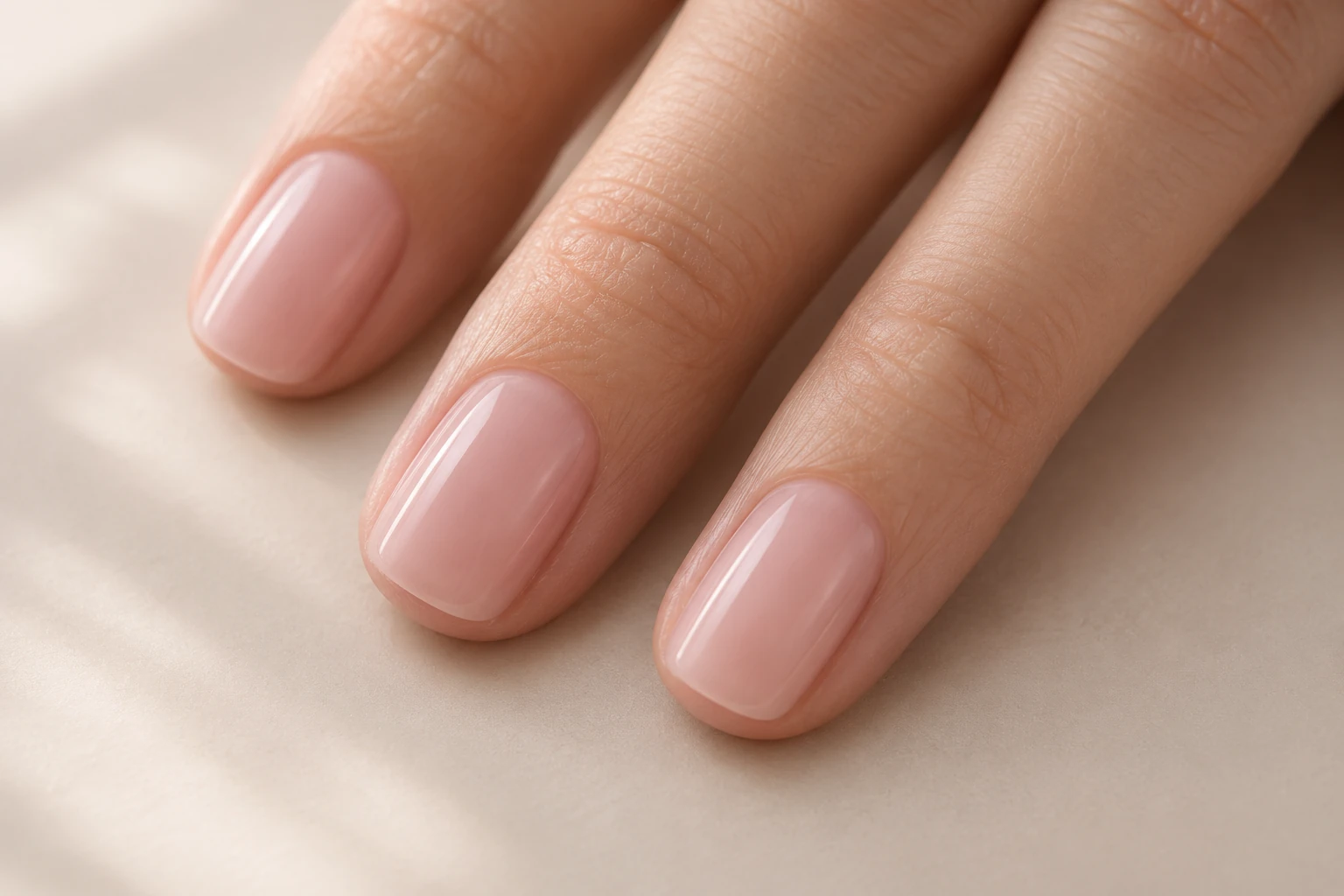
Wash your hands normally while wearing press-ons and follow the adhesive’s directions for water exposure. For household cleaning, choose protection according to the cleaning product and the task. A manicure does not protect your skin from chemicals.
Before starting a long wet task, check that the nails are secure and comfortable. A loose tip is easier to address before you put on gloves.
Keep handwashing practical
Use soap and water as needed and clean around the nails without prying at their edges. CDC nail hygiene advice includes cleaning beneath fingernails. Avoid using the pointed end of a tool to dig under a bonded tip.
Dry your hands after washing. Be gentle when a towel passes over raised decorations. If fabric catches, free it carefully and inspect the area that snagged instead of pulling the nail against the towel.
Choose gloves for the cleaning product
Read the cleaner’s label to see which precautions and glove type it requires. “Waterproof” household gloves do not establish compatibility with every solvent or chemical. Replace gloves that are torn or otherwise unsuitable.
Make sure the fit leaves room for the fingertips without forcing the press-ons upward. If the nails strain the glove ends or reduce your grip, a shorter style or a different cleaning arrangement may be necessary.
Use tools for scraping and lifting
Avoid scraping dried food, labels, or residue with the free edge. Use the appropriate brush or scraper for the surface. Nails can catch unexpectedly when reaching beneath a sink rim or pulling a fitted cover.
Keep your usual cleaning tools accessible so you are not tempted to substitute a tip. If a task needs substantial force, reassess how you can hold the tool securely without placing that force through a nail.
Do not leave damp gloves on unnecessarily
When the task is finished, remove gloves carefully and dry your hands. Check inside reusable gloves and care for them according to their instructions before storing them. A glove that is wet inside is a reason to pause and change it, not to keep working for the manicure’s sake.
Inspect the nails after prolonged water exposure or a snag. Movement, a catching edge, or an obvious gap means the bond needs attention. Do not seal a wet opening with fresh glue.
Respond to a problem without improvising
Follow the actual adhesive’s removal directions if a nail lifts. If cleaning chemicals contact your skin or eyes, follow the cleaner’s exposure instructions and obtain appropriate help. Nail care should not delay that response.
For your next application, record which task caused difficulty and whether the issue involved length, decoration, glove fit, or an already loose edge. That information is more useful than assuming you need a stronger adhesive for every cleaning day.