
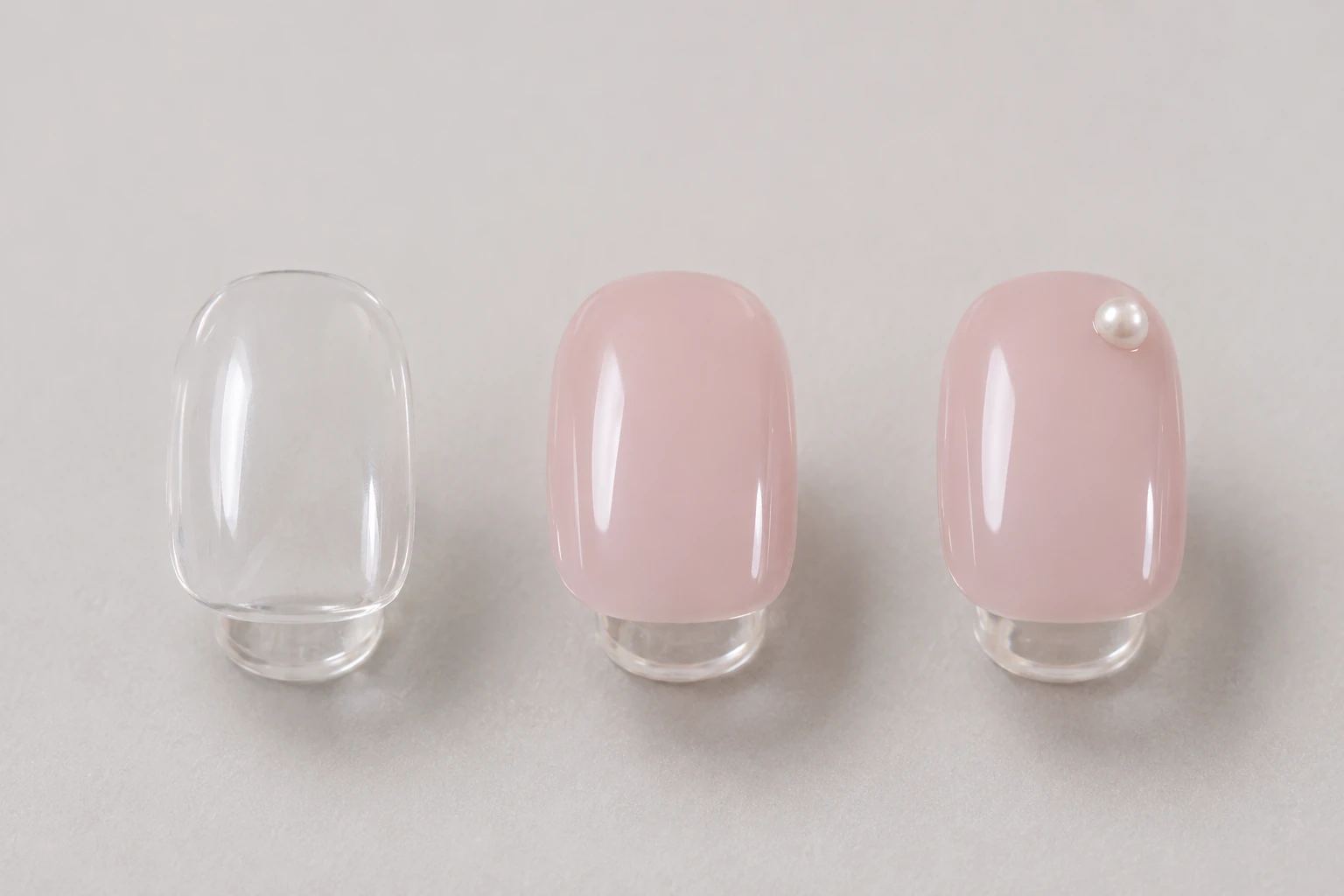
Some press-on nails are designed to be reused, but reuse depends on the actual set, adhesive and removal process. A tip surviving removal is only the first check. It also needs to remain cleanable, structurally sound and suitable for another comfortable fit.
Look for reuse instructions from the supplier. They should explain compatible attachment, removal and cleaning methods. If the instructions describe single use or removal that dissolves the nail, plan around that rather than trying to preserve it through a different process.
Why the adhesive matters
An adhesive tab may come away from a detached shell differently from cured liquid glue. The amount left behind and the approved cleanup method influence whether the inside can be prepared again. Neither adhesive makes every press-on reusable.
Check whether the reuse statement applies to the combination you used. A set advertised as reusable with tabs may not carry the same instruction after an incompatible solvent or liquid glue has been applied. Do not layer new adhesive over old buildup to recover the original fit.
Inspect the shell and the surface
Hold the detached nail under good light and check its edges, sidewalls and underside. Look for splits, sharp areas, permanent bending, loose decorations and changes in the finish. A crack can be difficult to see against a busy design, so tilt the nail and check it from more than one angle.
A tip that now rocks, needs pressure to lie flat or has a rough adhesive surface should not be forced onto the nail. Recheck its size on the finger it came from. Keep left and right placements organized so you do not assume similar-looking nails have an identical fit.
Cleaning is not a promise of disinfection
Follow the manufacturer’s cleaning instructions and allow the nail to dry fully before storage. Do not invent a soaking routine or assume alcohol, boiling water or a household disinfectant is compatible. A visibly clean tip is not automatically sterile.
Keep reusable sets personal. If a nail was worn during a suspected infection or another unexplained nail problem, set it aside and ask a clinician before considering reuse. Do not treat home cleaning as a way to make a potentially contaminated item suitable for sharing.
Know when to retire a set
Retire nails that cannot be cleaned as directed, have structural damage or no longer fit comfortably. A beautiful finish is not a reason to wear a sharp, distorted or poorly attached tip. Replacing one damaged nail may be possible if the supplier offers an appropriate match.
Your natural nails matter too. Do not apply a saved set over pain, redness or an unexplained color change; those findings deserve attention first. NHS guidance on nail problems.
There is no universal number of repeat wears. Keep a simple note of the set and removal method if that helps you compare condition over time. Judge the next use by instructions and inspection rather than a target wear count.