
Leftover adhesive needs a different decision depending on where it is: on your natural nail, inside a detached press-on, or spilled while still liquid. Do not treat all three as the same cleanup job. Start by identifying the adhesive and checking its directions.
A small patch can be tempting to pick. If it is firmly attached, picking can pull at the nail beneath it. Work slowly enough to tell whether you are removing softened adhesive or dragging across the natural nail. Stop when you cannot distinguish the two.
Residue on the natural nail
Use the residue-removal step specified for the adhesive. That may involve a compatible remover and a waiting period. Do not substitute an aggressive file, sharp metal edge or a tool pushed underneath the nail. The aim is to release remaining adhesive without thinning the nail plate.
After the approved process, wash or rinse as directed and inspect the nail in good light. Do not keep repeating solvent exposure simply because a tiny area looks different. If you are unsure whether you see glue or a change in the nail itself, leave it alone and ask for advice.
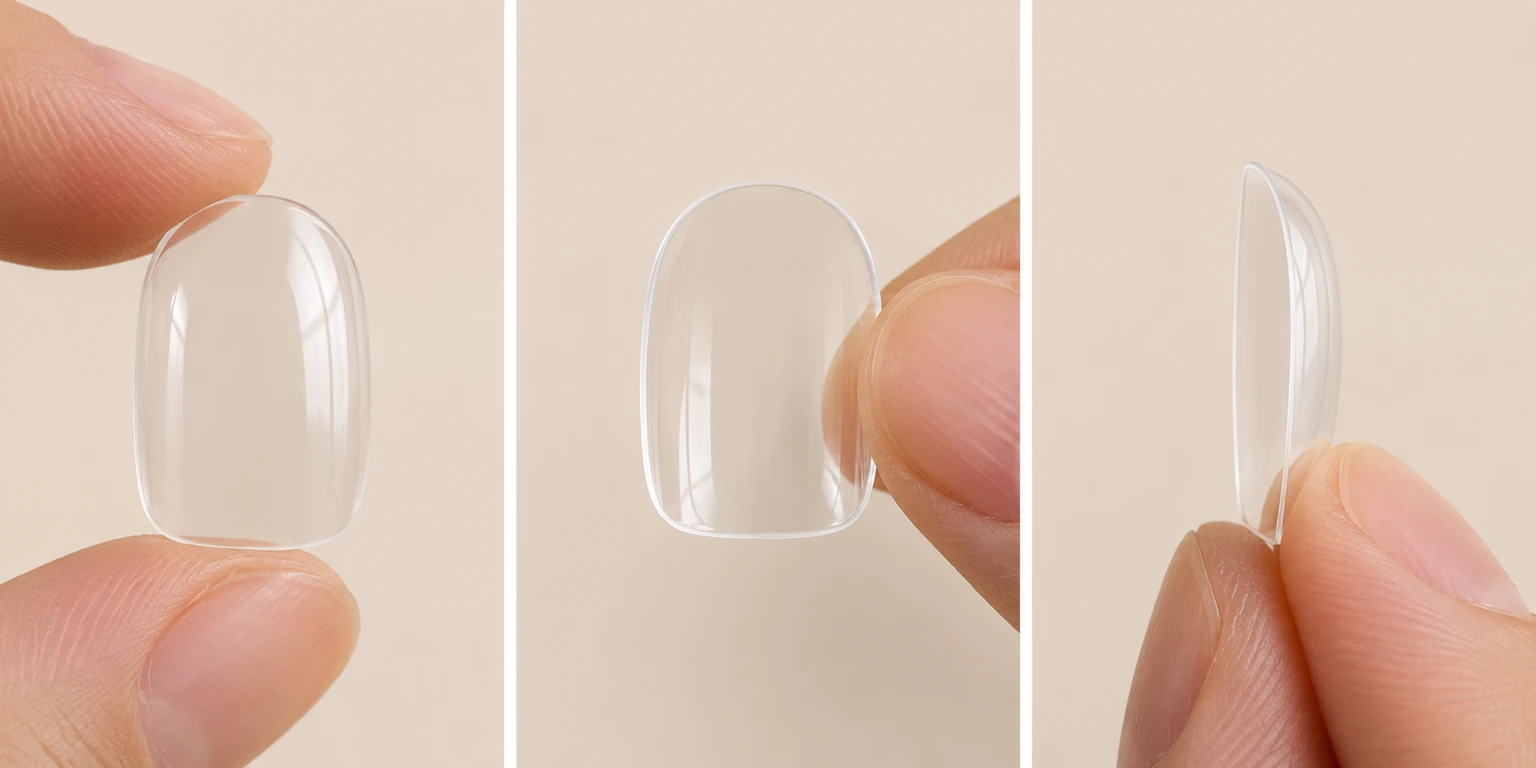
Residue inside a detached tip
First decide whether the press-on is intended for reuse. Use only a cleaning method compatible with its material and finish. A remover that works on your natural nail may damage the tip, and a tool that fits inside the shell may gouge or crack it.
For tabs, follow the directions for peeling or rolling away the used adhesive after detachment. For cured glue, do not grind away material until the interior becomes thin. If safe cleanup is unclear or the tip becomes distorted, retiring it is preferable to creating an uneven contact surface for another application.
Fresh glue is a separate situation
Do not reach for cotton pads, cotton clothing or wool to wipe up fresh cyanoacrylate nail glue. ANSES describes a rapid heat-producing reaction between this glue and those fibers that can cause burns. ANSES explains nail-glue burn hazards. Keep the area away from children and follow the spill directions on the glue label.
If glue bonds skin, clothing or an eye, or a spill becomes hot, stop the manicure and obtain exposure-specific advice. Do not pull bonded surfaces apart or put nail remover into an eye. In the US, Poison Control can guide you at 1-800-222-1222; call 911 for a severe emergency.
Before applying another set
Your nail should be comfortable and free of a problem that needs assessment. Do not conceal persistent pain, redness or a separating nail beneath fresh adhesive. NHS guidance recommends seeking help for unexplained nail changes. See NHS nail-problem guidance.
Keep the adhesive name and removal directions with your supplies. Next time, you can choose the correct cleanup method immediately and avoid the cycle of picking, extra buffing and adding more product over an uncertain surface.