
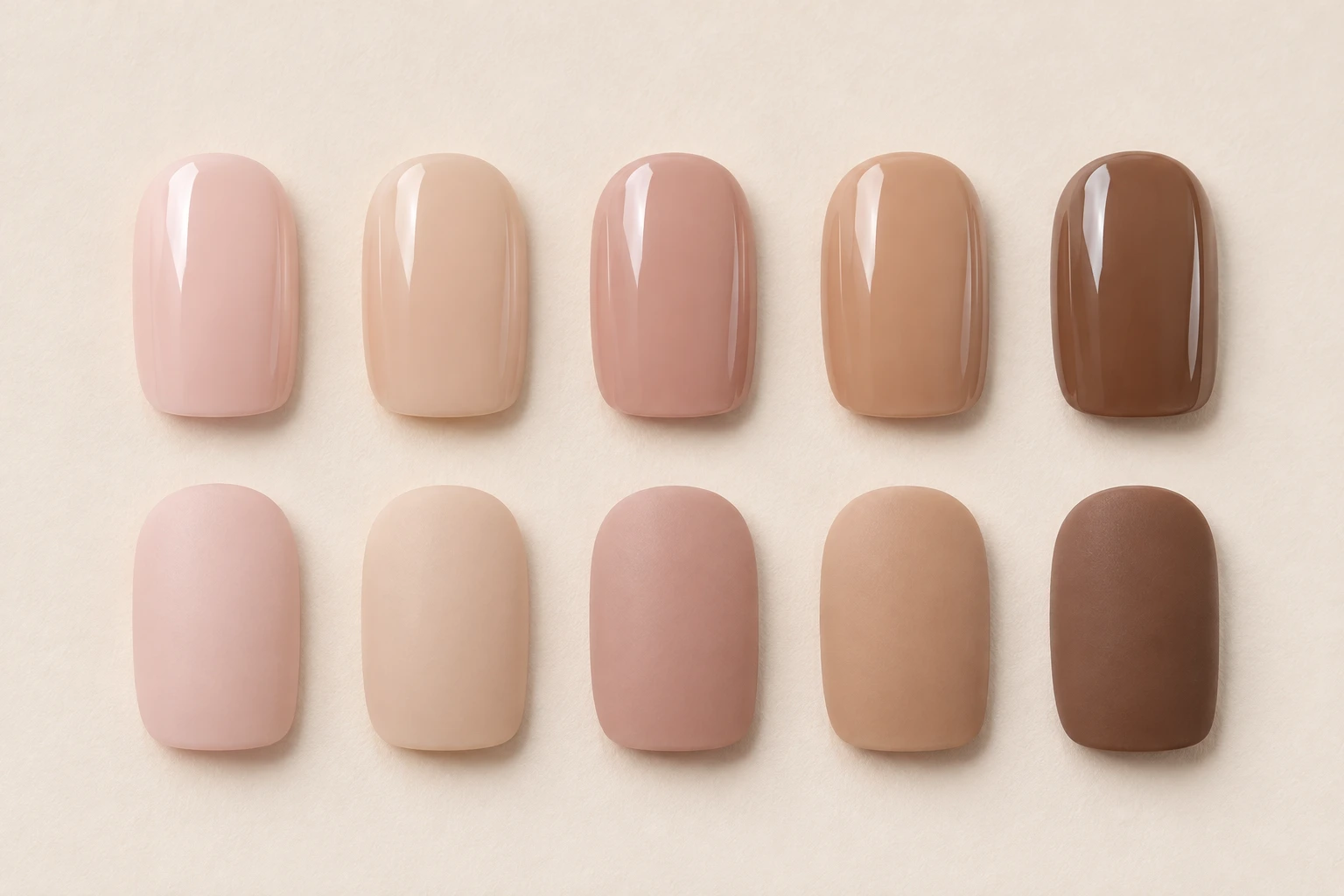
Glossy nails have more conspicuous, sharp reflections. Matte nails scatter the reflected light more diffusely, giving the surface a softer appearance. The same color can therefore feel quite different in these two finishes. Choose the version you like looking at in everyday light, not just the one with the most dramatic product photo.
Gloss and matte describe the surface appearance. They do not, by themselves, tell you the nail's material or how long it will last.
What the reflection shows
A glossy surface often carries a bright highlight from a window or lamp. On a curved nail, that highlight can make the shape especially visible. A matte finish has a less mirrorlike reflection, so broad areas of color may appear more even in a photograph.
NIST's work on gloss describes its relationship to reflected light. That explains the visual distinction; it does not establish the wear performance of a particular manicure. NIST: Methods of determining gloss
Compare the same color when possible
If you compare a dark matte nail with a pale glossy one, you are changing both color and finish. A pair in the same shade is more informative. Move each slightly so the strongest glare does not hide the base color.
The sample image shows how glossy highlights and matte surfaces change the reading of neutral shades. It illustrates appearance, not a measured color match between manufactured products. In a listing, ask whether two finish options actually use the same base shade before expecting an exact comparison.
Think about the complete design
Gloss can emphasize a raised ripple, a clear detail, or a smooth reflective coating. Matte can provide contrast beside a glossy line or ornament. A nail can also combine both, so read whether the whole surface is matte or only part of the pattern.
On a French design, the base and tip might have different finishes. Check close-ups where the boundary is visible. A photo taken directly into a light can make the difference difficult to see, while a slight turn of the hand reveals it.
Handling and cleaning need product directions
Fingerprints, residue, and abrasion may change how a surface looks, but the response depends on the coating. Do not assume every matte nail needs the same cleaning method or that glossy nails tolerate stronger solvents.
Start with the care method specified for your set. Avoid experimenting with abrasive cleaners or aggressive scrubbing to remove a small mark. A method that removes residue may also change the intended finish. If a spot will not come off with the permitted cleaning method, ask for guidance before escalating.
Can you change the finish yourself?
Adding a clear top coat or buffing the surface changes the finished product. It may affect artwork, decoration, compatibility, or removal. A gel top coat also introduces a curing system with its own requirements; a shiny surface is not a reason to add one casually.
If you already know you want matte or gloss, buy that version where available. For a mixed look, plan the finish placement before application and keep the nail shapes consistent if you want the surface contrast to be the main feature. The useful question is how the finish fits your style and routine, rather than which one is universally better.