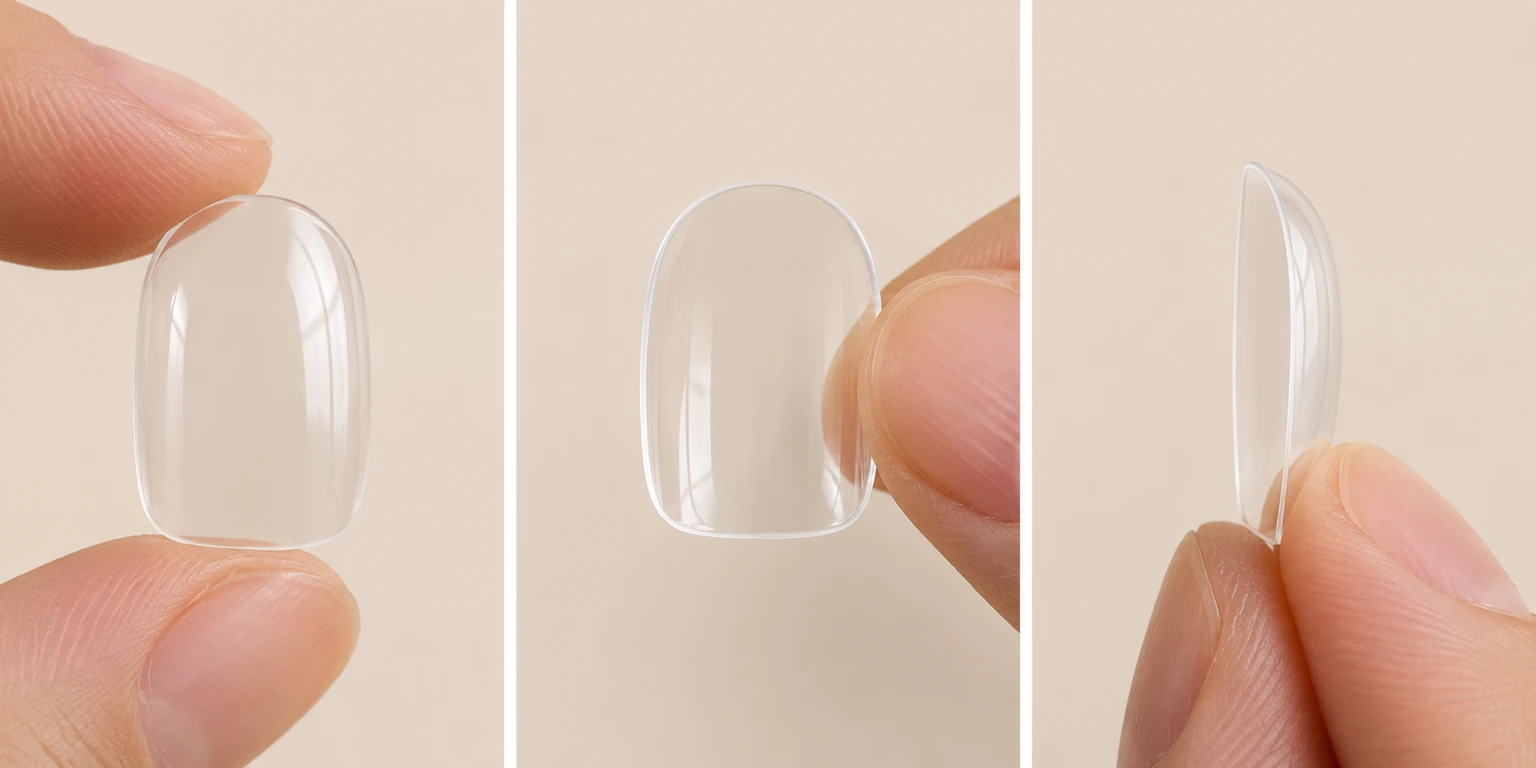
Nail curvature describes how the surface bends. For press-on fit, two directions matter: across the nail and along its length.
The term C-curve commonly describes the side-to-side cross section seen from the free edge. A side photograph shows the lengthwise arch instead. Ask which view a seller means when it describes a nail as flat or curved.
Width and curve are different
Two tips can span a similar width yet sit differently. A deeper curve may leave a gap over a flatter natural nail or need pressure to spread. A flatter tip may not accommodate a more arched natural nail.
That is why a matching width number is a starting point rather than a complete fit guarantee.
Compare three views during dry fitting
- From above, check coverage at both sides.
- From the front edge, compare the crosswise curve.
- From the side, look at the arch and whether the tip rocks.
Fit each finger separately. Corresponding fingers on different hands can need different sizes or have different profiles.
What a comfortable dry fit looks like
The tip should cover the intended nail surface without resting on the surrounding skin. It should sit comfortably without sustained pressure to flatten or stretch it.
A small amount of space may be addressed by the product’s intended adhesive system, but do not invent a gap-filling method. Follow the set’s instructions and ask about another shape if the fit is uncertain.
Do not reshape a tip with heat
A hot-water, hair-dryer, or flame technique seen online does not establish that a nail and its coatings tolerate that treatment. It may also distort the size or finish.
Use only supported adjustments. If side filing is permitted, it may change the width, but it does not necessarily correct the body’s curve.
How to ask for fitting help
Send the seller a front and side photograph of the dry fit, with no adhesive applied. Explain which finger is affected and whether the problem is tightness, rocking, uncovered side edges, or skin overlap.
Include the set and size number. Those details make it easier to discuss a specific fit rather than rely on a broad label such as “flat nail bed.”