A UV-cured nail adhesive is a light-curing product used as part of a specified nail system. It is different from ordinary air-setting nail glue and from adhesive tabs. The gel, nail tip, lamp, application, and curing instructions need to work together.
Do not assume a finished press-on is suitable for a light-cured adhesive because it looks clear, says gel in its description, or fits under a lamp. Confirm that exact use before applying it.
What needs to be compatible?
Start with the adhesive's instructions. They should identify the appropriate lamp, curing sequence, and suitable tips or covers. The intended thickness and placement of the gel matter too. A nail sold as a finished decorated press-on may not have been designed for this kind of attachment.
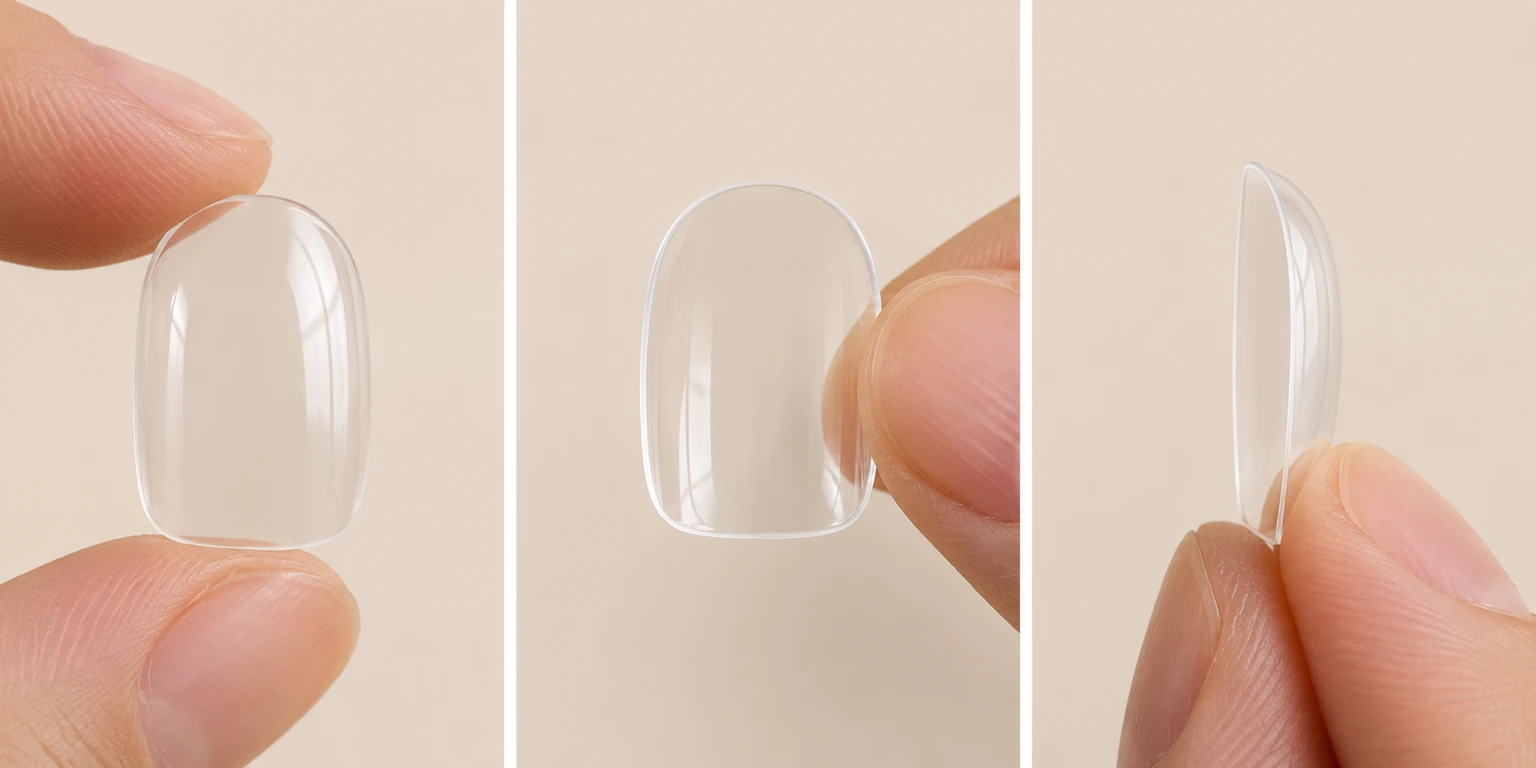
The clear nail in the example photo shows a shell's shape and underside, not a verified curing system. Appearance alone cannot tell you whether enough of the relevant light will reach an adhesive through that particular product.
Color and decoration matter
An opaque color or a substantial decoration can interfere with light reaching product beneath it. A tiny clear patch elsewhere on the nail does not validate curing under a colored area. Do not attempt to solve an incompatible combination by adding an arbitrary amount of extra lamp time.
If the system is not explicitly intended for your finished nail, use an attachment method approved for it or choose a different set. Keeping ordinary press-on attachment separate from a gel extension system avoids borrowing steps that do not apply.
Use the specified lamp and sequence
A lamp's advertised wattage is not a complete compatibility specification. Follow the exact lamp recommendations and curing instructions for the product. A small positioning or flash-cure step should not be substituted for the full curing procedure unless the directions explicitly say it is sufficient.
The British Association of Dermatologists warns that uncured nail products contacting skin can cause sensitization and that insufficient curing can increase allergy risk. It advises using the recommended lamp. BAD: Artificial nail products and allergy
Avoid skin contact rather than curing over it
If gel squeezes onto skin during placement, do not continue by curing it there. Follow the product's instructions for correcting the application before proceeding. Using less product is not a substitute for learning the specified technique, and a nail that must be forced down may have the wrong fit.
A surface that feels hard is not a home measurement of complete curing throughout the adhesive. Do not use tackiness, pressing, or a scratch test to certify that an unfamiliar combination is safe to wear.
Know when to choose a simpler system
If you cannot identify the required lamp, compatible tip, or complete curing directions, pause that application. A finished set designed for tabs or non-curing nail glue may be more appropriate for the experience you want.
Do not cover an unexplained reaction with another nail. Stop using a product that causes a reaction and seek medical advice for persistent symptoms. Keep the ingredient information and product names available if you need help identifying what was used. Light-cured attachment is a specific process, not an upgrade that every press-on requires.