
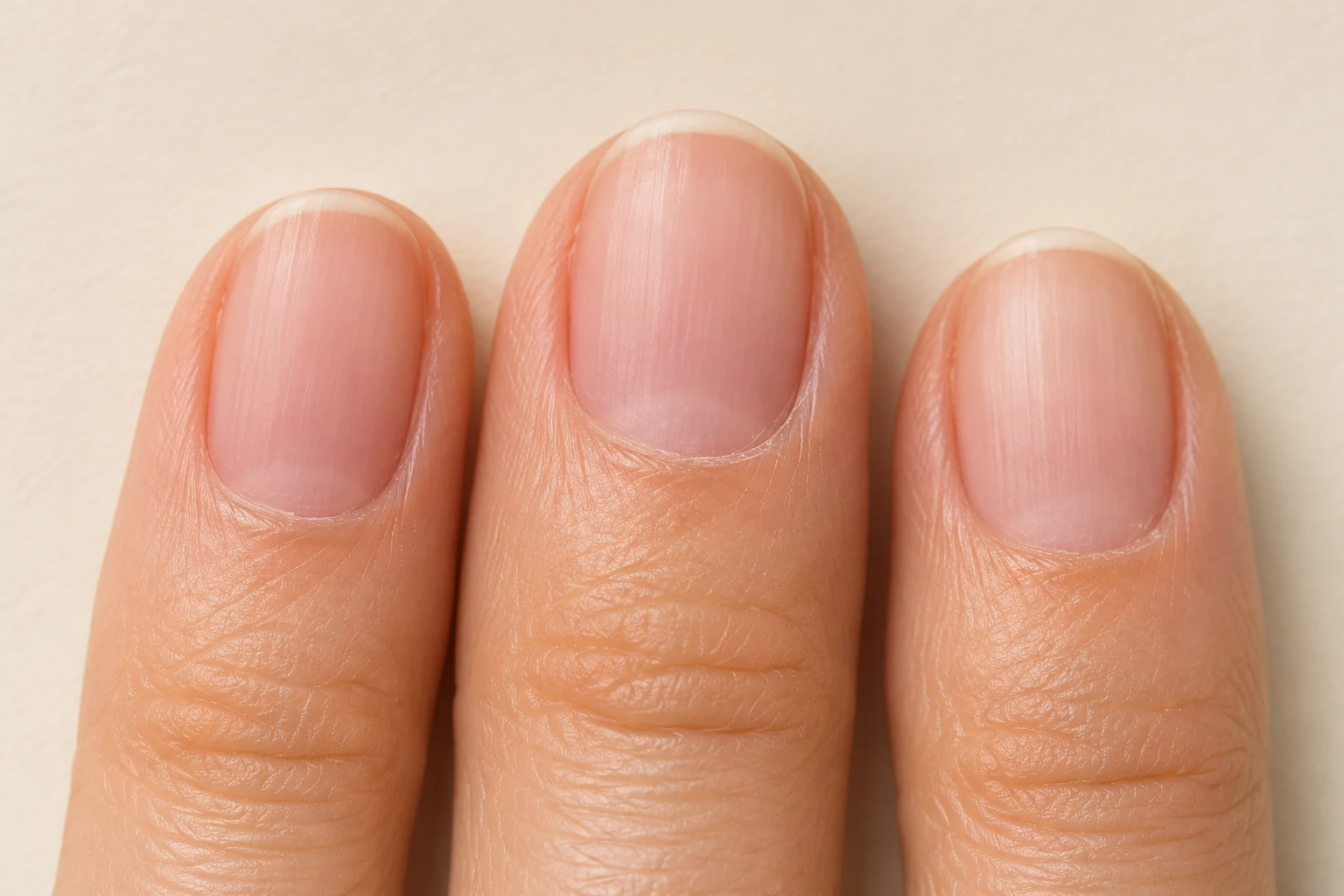
After removing press-ons, check how your natural nails and surrounding skin feel before planning the next set. Routine aftercare can be simple: follow the removal product’s cleanup directions, avoid picking remaining residue and give yourself a clear view of each nail.
A nail that feels sore, looks unusually discolored or appears to separate needs a different decision from a comfortable nail with a little surface dryness. Do not label every change “normal damage” or hide it under another manicure. You do not need to identify the cause yourself to pause application.
Start with gentle handling
Wash or rinse as directed after removal, then dry your hands. If adhesive remains, use its approved removal process. Avoid scraping, peeling or buffing repeatedly to make the surface look perfectly even. Additional abrasion can make it harder to see what was residue and what was the nail itself.
Keep nails at a manageable length and smooth a catching free edge gently with a suitable file. Do not dig beneath a nail or cut away attached skin. For everyday handwashing and household tasks, pay attention to how the nails feel rather than using them as tools to lift or pry.
Moisturize comfortable, intact skin
The American Academy of Dermatology recommends moisturizing nails, including after nail-product removal. See AAD manicure safety advice. Choose a hand moisturizer you already tolerate and use it according to its directions. More products are not automatically a better aftercare routine.
If a product stings or produces a rash, stop using it and seek advice when needed. Avoid putting fragrance oils, glue or a hardening product onto irritated skin in an attempt to repair it. A smooth-looking coating cannot establish that the underlying nail is healthy.
Check changes without diagnosing them
Look for persistent pain, surrounding redness or swelling, unexplained color changes, a new abnormal shape or a nail lifting away from its bed. NHS nail guidance recommends medical assessment for unexplained changes and sore, swollen skin around a nail. Read NHS guidance on nail problems.
Photographs in ordinary light and a list of recently used products may help you explain what changed. Keep the packaging and ingredient information. Do not compare a photo online and assume it proves an allergy, infection or a harmless stain.
When can another set go on?
There is no universal waiting period that makes every nail ready. Follow the product’s directions and base the decision on the actual condition of your nails and skin. Ongoing symptoms, known allergy concerns or an unresolved nail change are reasons to ask a clinician before reapplying.
If your nails are comfortable and intact, use the next application to revisit fit and removal. A press-on that requires pressure during fitting or a bond that was pulled off last time calls for a change in technique or product choice, rather than a stronger aftercare routine afterward.