
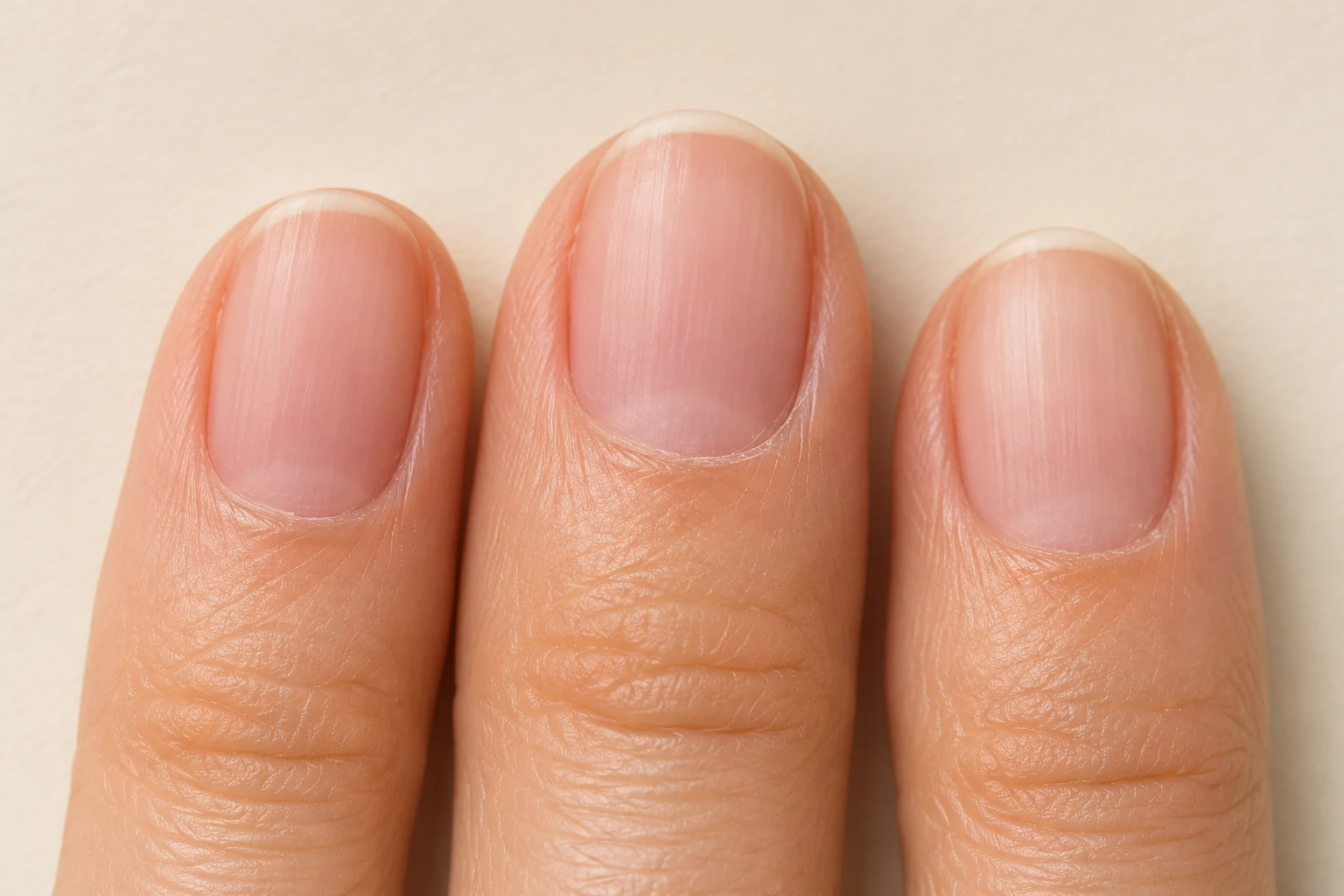
Do not use a press-on to hide a nail change you cannot explain. A new color, persistent soreness or a nail lifting from its bed deserves attention before adhesive goes back on. You do not have to know whether the cause is trauma, irritation or something else to leave the nail uncovered.
Nails can change for many reasons, and a photograph is not enough to identify the cause. A neat-looking cover may make monitoring harder and add another product exposure while the original issue remains unresolved. Pause the manicure and decide whether you need medical advice.
Changes worth checking
NHS guidance recommends seeing a clinician when a nail changes shape or color without an obvious explanation, or comes off without a known cause. Sore, red, swollen or warm skin around a nail is another reason to seek help. Read NHS nail-problem guidance.
Take persistent pain, discharge, bleeding, a new unexplained dark mark or increasing separation seriously. Do not assume a green, white or dark area is one specific infection from its color. A clinician needs the history and an appropriate assessment to decide what it means.
When a nail starts lifting
Lifting of the press-on and separation of the natural nail are different observations. A loose artificial edge does not tell you what is happening beneath it. If the natural nail itself seems to be pulling away, do not press it down with glue or push a tool beneath it to inspect.
Arrange safe removal advice if the cover prevents a clear view. Avoid peeling a firmly attached tip away to take a photo. If pain is substantial, the area is rapidly worsening or there has been a chemical exposure or injury, seek prompt care rather than waiting for a routine manicure break.
Keep the history simple and useful
Record when the change appeared and whether it followed a bump, removal, new adhesive or new hand product. Save the packaging and note any symptoms beyond the nail. A photo in consistent light can document progression while you arrange advice, but should not become a reason to delay it.
Do not apply bleach, household cleaners or an improvised antifungal treatment to test a theory. Avoid digging beneath the nail or cutting the surrounding skin. CDC nail-hygiene guidance emphasizes protecting cuticles and keeping nail-care equipment clean. See CDC nail-hygiene advice.
Before returning to press-ons
The American Academy of Dermatology advises against covering nail problems with artificial nails. Read AAD manicure safety guidance. If a clinician recommends a treatment or a period without nail products, follow that advice rather than using a shorter press-on wear as a compromise.
When you are cleared to resume, review the previous fit, adhesive and removal process. Keep unresolved questions with your product notes. A saved set can wait; the priority is understanding the change and avoiding another application over a nail that still needs care.