
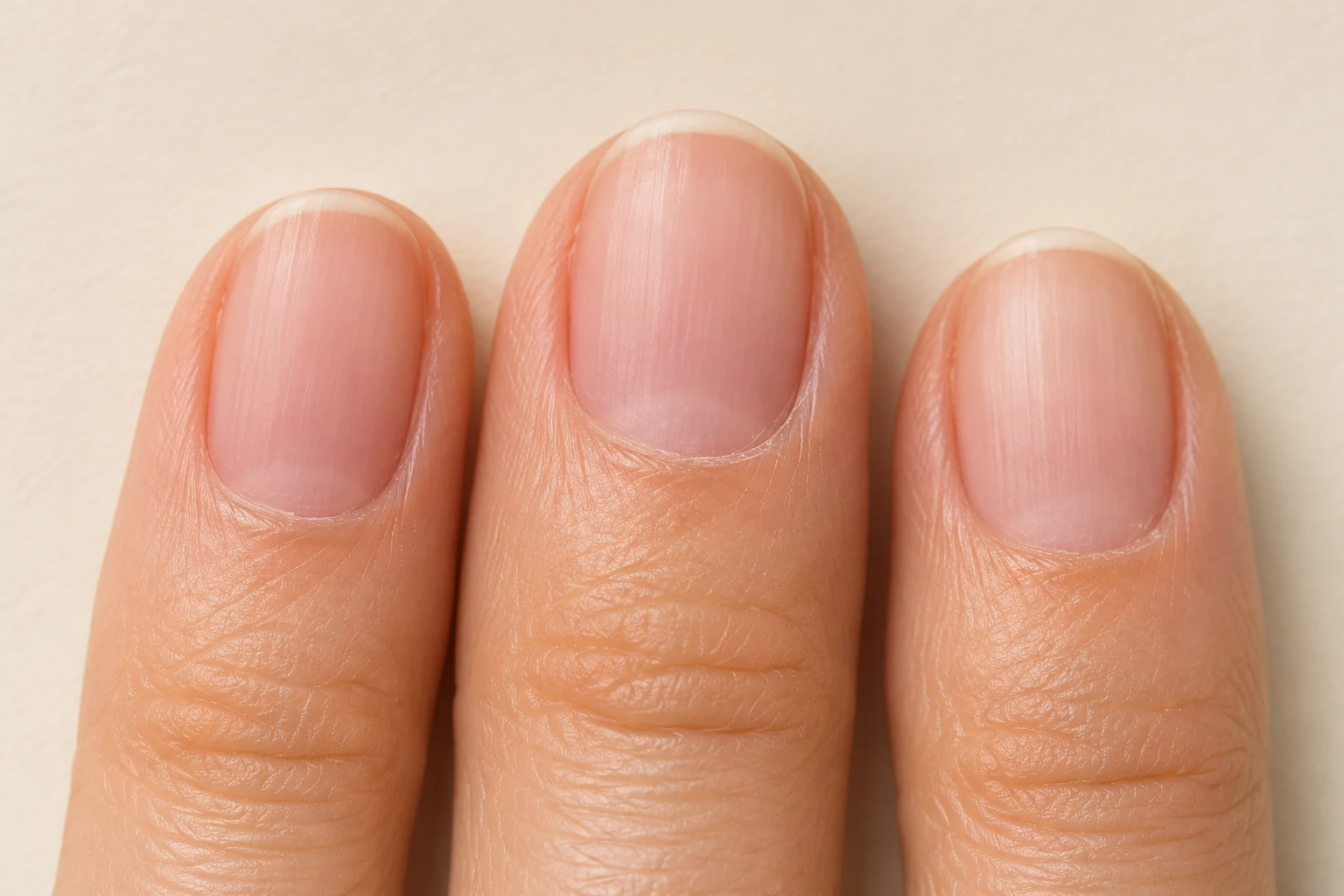
Irritation and allergy are different types of reaction, but you cannot reliably tell them apart by looking at a red or itchy finger. Nail adhesives, removers, coatings and preparation products all deserve consideration when symptoms appear. The safest first step is to stop the suspected exposure and avoid covering the area again.
A reaction does not prove that the plastic shell caused it. Think about every product that touched the nail or skin, including something used during removal. Keep the names and ingredient lists so a healthcare professional can evaluate the history instead of relying on a vague description of “nail products.”
What the terms mean
Irritant contact dermatitis involves direct irritation of the skin. Allergic contact dermatitis involves an immune response to a substance to which a person has become sensitized. DermNet describes both kinds of reaction in relation to nail cosmetics. Their appearance can overlap. Read DermNet’s nail-cosmetics allergy overview.
Do not use timing alone as a diagnosis. A product can become a concern even if you have used it before, and a delayed reaction may be difficult to connect with a particular application. A clinician can decide whether specialist patch testing is appropriate.
What to do when symptoms start
Stop using the products involved and do not apply more adhesive over uncomfortable skin. Follow product-specific safe removal advice rather than peeling off a firmly attached nail. If you cannot remove it without pain, or the reaction is significant, ask for professional guidance.
Seek prompt medical advice for persistent or worsening redness, itching, swelling, blistering or nail separation. Severe swelling, breathing difficulty or other signs of a serious reaction need emergency help. This is not a situation to test a second glue on another finger.
Keep a useful product history
Write down when the set was applied, which adhesive and prep products were used and when symptoms began. Include removers, hand products and any at-home coating or curing steps. Photos can help document change but cannot replace an examination.
Save the package, ingredient panel and batch information when available. FDA guidance on cosmetic allergens encourages consumers to read ingredient labels and contact manufacturers for additional information when necessary. See FDA information on allergens in cosmetics. A supplier’s description of a finished tip may not list every separate product you used with it.
Choosing products after a reaction
Do not assume adhesive tabs, “sensitive” formulas or products labeled hypoallergenic are automatically suitable. Different products have different ingredients, and switching attachment methods does not identify which substance caused the problem. Share the full ingredient information with your clinician if you have a known allergy.
Once you have professional advice, use it to choose or avoid specific ingredients and procedures. A shorter wear time or a smaller amount of the same suspected product is not a substitute for resolving an allergy concern. Keep the next manicure on hold while the skin or nail is still affected.