
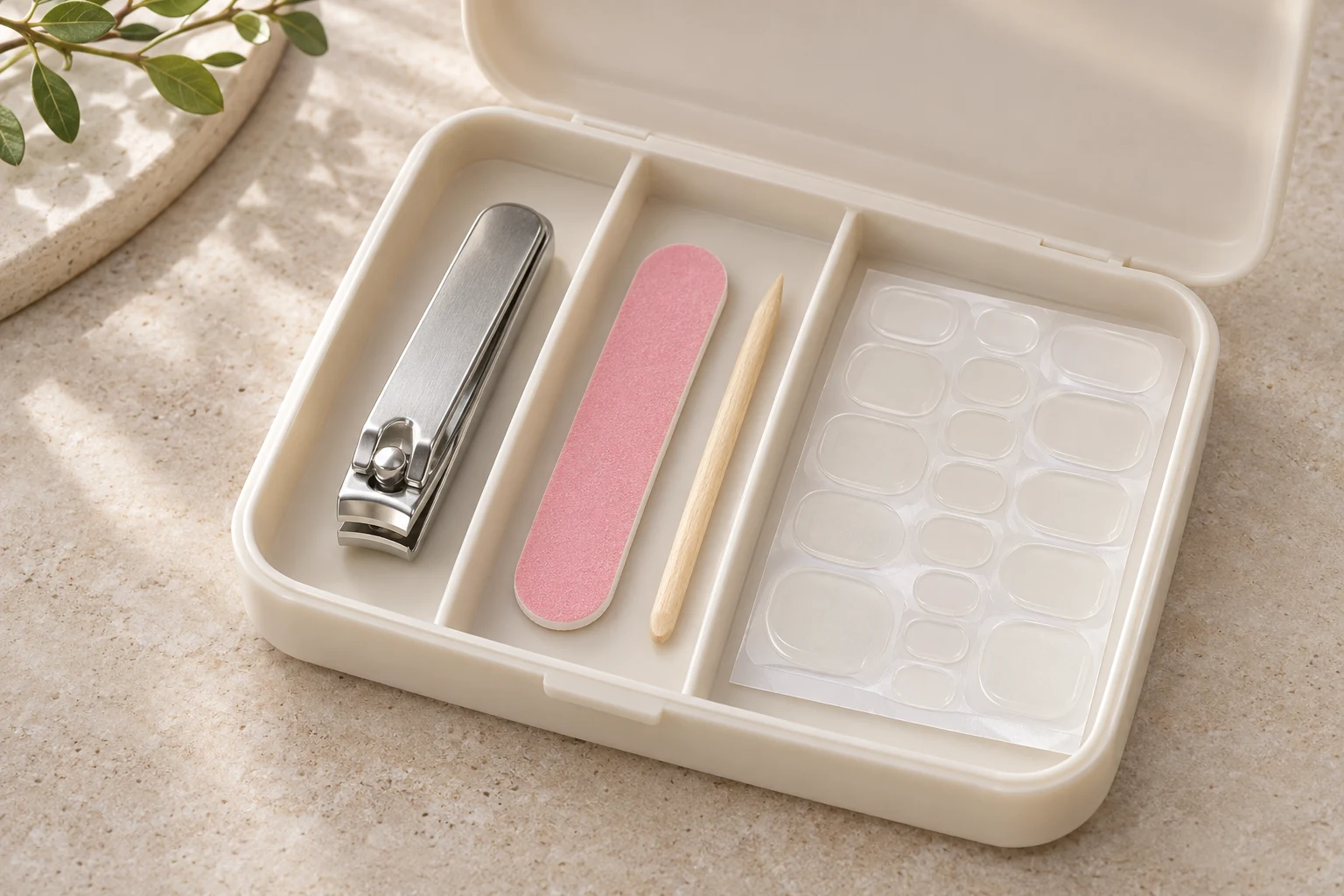
Clean nail tools before use, dry them thoroughly, and store them where they will stay clean. The care method depends on the tool. A metal clipper, a cardboard file, and a wooden stick cannot all be treated the same way.
Keep your personal manicure kit separate from shared household tools. A file used for a craft project or a clipper left loose in a bag is no longer ready for your next manicure.
Sort tools by how they can be cleaned
Read the maker’s care instructions before washing or soaking anything. Some metal tools can be washed, while coatings, joints, adhesives, or handles may need different care. Files with paper or foam construction may be intended for limited use and can fall apart when wet.
Set aside disposable items after their intended use. A wooden stick that has collected adhesive residue should not become your permanent cuticle tool. Replace damaged files, chipped clippers, and anything you cannot clean as directed.
Remove residue before putting tools away
Check the working edges and moving joints under good light. Remove visible nail dust and debris using the method recommended for that item. Keep liquid nail adhesive away from tools unless a tool is specifically designed for that application.
If you accidentally get glue on a tool, follow the glue and tool instructions together. Scraping at hardened adhesive can damage a cutting edge. A tool that no longer closes or cuts smoothly needs attention before it comes near a nail.
Understand what cleaning achieves
CDC nail hygiene guidance recommends cleaning nail grooming tools before use. Washing, disinfecting, and sterilizing describe different processes; a quick wipe does not establish that a tool is sterile.
For a reusable washable tool, follow its cleaning directions and let all parts dry before closing the case. Do not seal moisture into a pouch. If a disinfection product is appropriate for that tool, its label determines the method and contact time.
Give clean tools a separate home
Use a clean tray, compartmented box, or washable pouch. Keep sharp edges protected and avoid crowding them against loose nail tips. Store liquids upright in their original closed containers, away from children and the conditions prohibited on the label.
Separate unused tips from worn tips awaiting care. Adhesive tabs should stay on their original backing and inside their protective packaging. A loose tab can collect lint before you even notice it.
Check the kit before the next application
Open the kit before you start preparing your nails. Look for a wet pouch, rusty joint, missing cap, or contaminated file. Replacing a small item now is easier than improvising after your nails are prepared.
Leave a little space in the kit for a note of your confirmed nail sizes. Keep that paper away from cleaning liquids so the record survives your next manicure.