
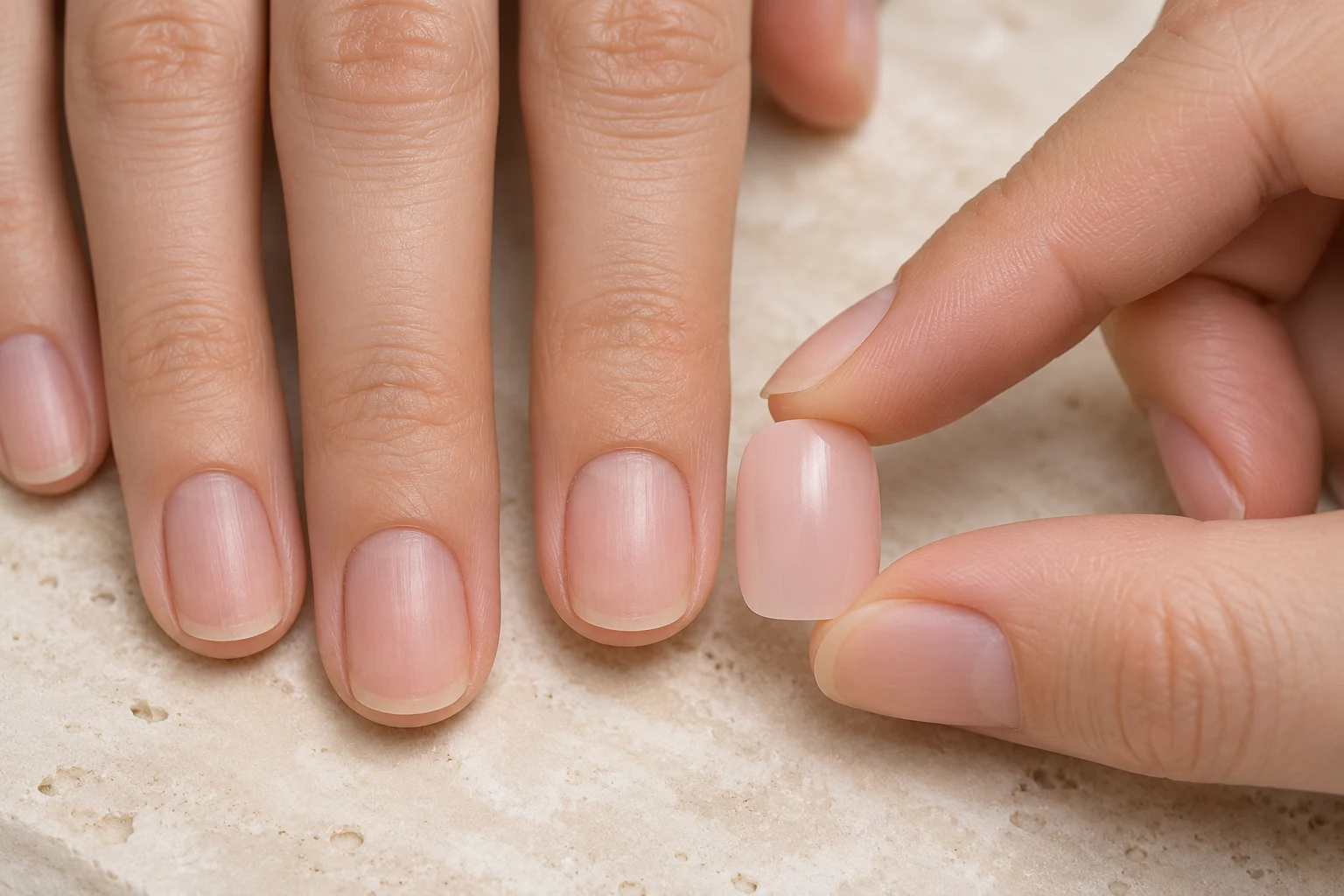
A press-on can pop off because the tip did not fit well, the adhesive application differed from its directions, or a task placed force on the bond. A lost nail by itself does not reveal which cause mattered most.
Check the natural nail and the detached tip before replacing it. If the natural nail hurts or looks damaged, pause cosmetic reapplication and seek appropriate advice.
Start with the dry fit
Try the same style without adhesive only if the tip is suitable to handle and reuse under its care instructions. Check side-to-side coverage, cuticle clearance, and curvature. A nail that rocks or needs constant pressure may have been a poor match from the start.
Review the selected size for that exact finger. A different number may fit better, but width alone does not resolve every curve problem. Do not choose an undersized tip to make it squeeze onto the nail.
Review preparation without overdoing it
Think through what happened before application. Were the required surfaces prepared as directed? Did you touch a cleaned nail or apply oil afterward? Was filing dust left in the contact area? Those questions can identify a step worth changing.
Do not respond by aggressively buffing the natural nail. More filing can create a new problem without correcting size or placement. Use only the preparation required by the adhesive system.
Check how the adhesive was used
Confirm the adhesive type, specified amount, application locations, and holding time. Tabs need their correct release layers removed. Liquid glue needs controlled placement that keeps it off skin. Neither benefits from an improvised mixture of products.
Consider the product’s condition and storage directions too. A blocked nozzle, dried tab, or damaged package needs attention before another application. Do not thin glue or add another liquid to restore it.
Look at the task just before detachment
Opening packaging, lifting with a nail edge, catching a decoration in fabric, and gripping equipment can place force through the tip. Longer exposed edges may change how easily a task catches the manicure.
Water exposure may also be relevant if it conflicted with the adhesive directions. Keep that possibility separate from a conclusion: one nail coming off after a swim does not prove that water was the only cause.
Replace it only after assessment
Follow the tip’s care instructions before any reuse. Remove old adhesive by an approved method, use fresh adhesive when required, and address the suspected fit or technique problem. Do not simply add glue over whatever remains.
If the same finger repeatedly loses a nail, record its size, curve, adhesive, and the activity involved. That makes the next change deliberate. If discomfort or an unexplained nail change accompanies the repeated problem, pause and get advice instead of escalating adhesive strength.