
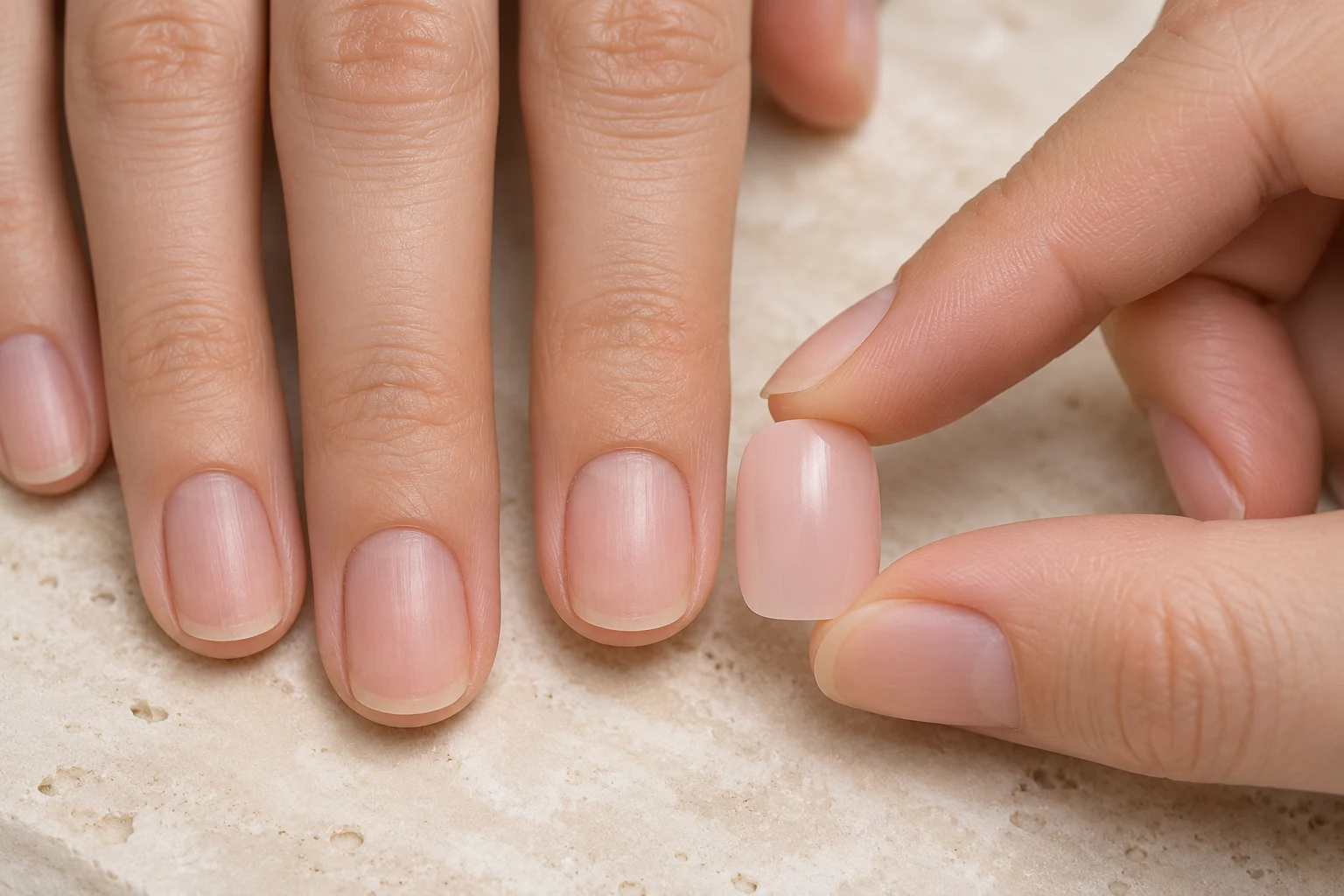
An air gap is a space between the press-on and the natural nail. Lifting means part of an existing bond has released. Both can affect fit, but they happen at different stages and need different decisions.
Check a gap before application while you can still change the tip. If an edge lifts during wear, stop treating it as a secure, intact manicure.
Look at the dry fit first
Place the tip without adhesive and view it from above, the side, and the fingertip. A transparent sample can make the contact area easier to see. The shell should rest comfortably without being forced into a different curve.
If a large central space remains or the sides pinch while the middle floats, try another size or style. Matching width does not guarantee matching curvature. Extra adhesive or stacked tabs should not be used as a general repair for that mismatch.
Check placement and the adhesive system
A tip can be the right size and still land unevenly. Rehearse its position, prepare the surfaces as directed, and use the adhesive amount and placement specified for the product.
Do not judge adhesive coverage through a decorative nail solely by its color. Translucency, reflective pigment, and surface shadows can change what you see. If a nail feels unstable or has an obviously loose edge, assess the bond rather than explaining it away as a lighting effect.
Recognize lifting during wear
An edge that catches in hair, moves independently, or visibly separates from the natural nail deserves attention. Avoid repeatedly flexing it to see how far it opens. That can enlarge the separation and place more stress on the remaining bonded area.
Do not slide a metal tool beneath it or pour fresh glue into the opening. You cannot clean and inspect a covered contact area that way. A top coat also does not restore the original adhesive bond.
Remove the affected nail as directed
Use the removal method for the actual adhesive. If there is resistance, follow the next step in those instructions instead of prying. After removal, inspect the natural nail and the underside of the tip in good light.
If you see an unexplained change, discomfort, or damaged skin, pause reapplication and seek appropriate advice. Appearance alone cannot tell you whether a change is staining, irritation, or an infection. Do not diagnose it from an online photo comparison.
Decide whether reapplication is suitable
Only reuse a tip if the product permits it and its condition meets the care directions. Remove old adhesive by the approved method, use fresh adhesive where required, and correct the original fit or placement problem.
Keep a note of the finger and the circumstances when lifting began. A repeated problem on one finger can guide the next dry-fit check. It does not establish a universal wear limit or prove that all adhesives will behave the same way.