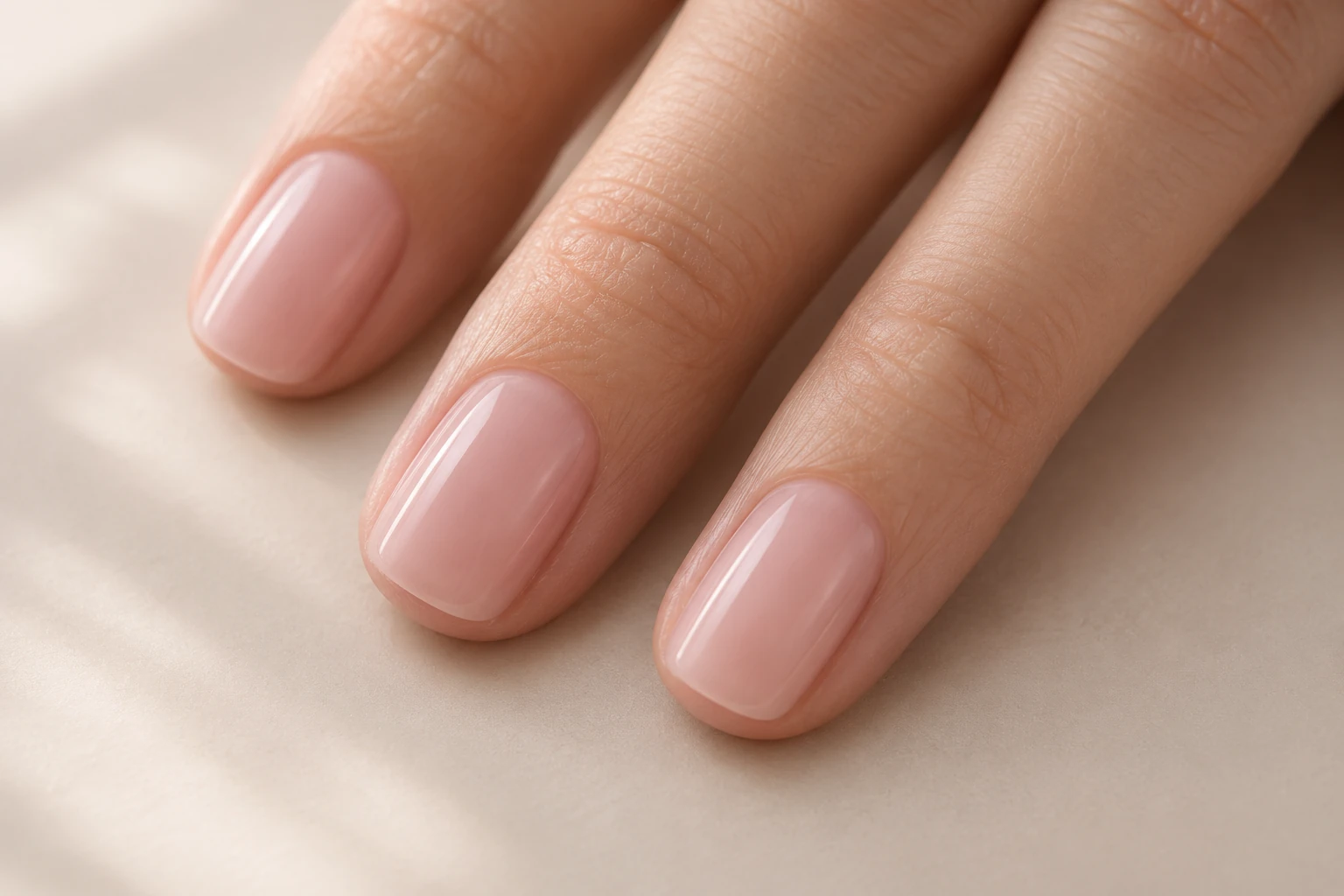
Press-on nails can get wet according to the directions for the adhesive you used. There is no single waiting time that applies to all tabs, nail glues, or other attachment systems. Check the actual label before planning a shower, swim, or dishwashing session.
Do not skip needed handwashing to protect a manicure. Plan your application so the product’s instructions can fit around ordinary hygiene.
Find the relevant direction
Look for guidance about water exposure, setting time, bathing, swimming, and removal. A stated holding time during application is not necessarily the same as the recommended time before water exposure.
If the instructions are unclear, ask the maker before applying the set. Avoid treating an online routine for a different adhesive as permission to shorten a waiting period or add heat.
Separate washing from soaking
A brief handwash, a long bath, and time in a pool expose the nails in different ways. Temperature, duration, and the work your hands are doing also differ. A claim that a product can tolerate water does not by itself answer every one of those situations.
Use your hands gently during the initial period specified by the product. Do not repeatedly soak the edges to test whether the manicure is ready. If your schedule requires water immediately, choose a different application time.
Continue cleaning your hands normally
CDC nail hygiene guidance includes cleaning beneath fingernails with soap and water. Keep the area accessible without digging sharp tools under the press-on or forcing a brush into a lifted edge.
After washing, dry your hands carefully. Pat around the nails without pulling the tips sideways. If an edge catches on a towel, inspect it instead of tugging until the fabric comes free.
Check the manicure after longer exposure
Look for a tip that moves, a loose cuticle edge, or a new area of separation. Do not press a wet lifted tip back down and assume it is bonded again. Follow the adhesive’s removal guidance and assess the natural nail before deciding on another application.
Water does not provide a reliable explanation for every lost nail. Fit, preparation, placement, and leverage during tasks can also be relevant. Record what happened without assigning a cause you cannot confirm.
Plan around the activity you actually have
For a swimming day or extended cleaning session, check the specific adhesive directions beforehand. Have a suitable removal plan available. A spare tip and glue are not a substitute for being able to remove an uncomfortable or unstable nail.
If you need a manicure only for an event, choose an attachment method whose stated use and removal fit that plan. Avoid a stronger adhesive just to override water instructions that do not suit your day.
Keep the adhesive package with your manicure supplies so its specific water guidance is easy to check at the next application.