
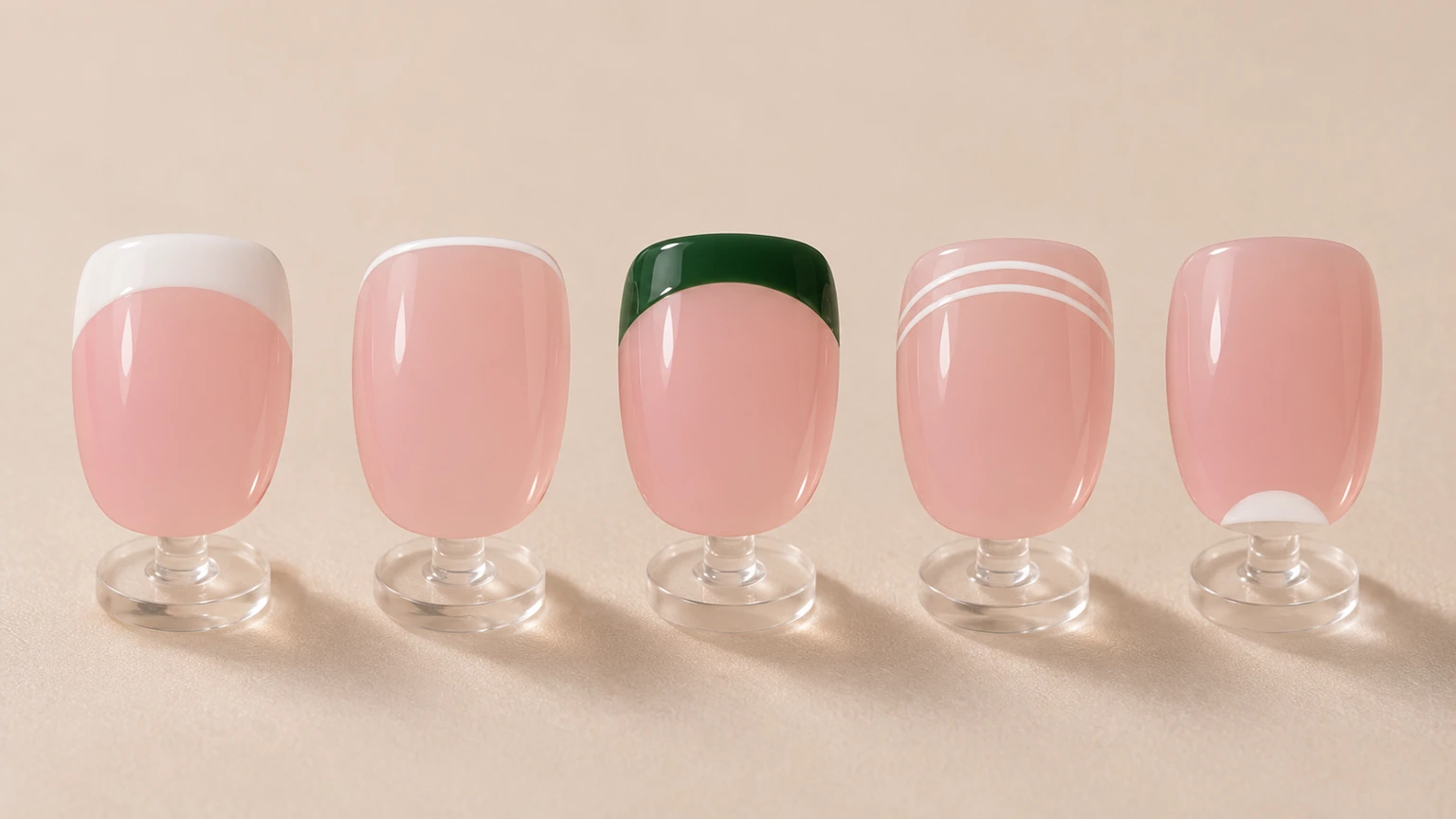
A French nail design separates the tip visually from the main nail bed area. The familiar version pairs a pink or neutral base with a white tip, but the same idea can use green, metallic, dark, or multicolored edges. The shape and placement of the boundary matter as much as the colors.
For press-ons, the design is already positioned on the nail. Look closely at how that placement will relate to your own nail bed and the length you plan to wear.
Classic French and the smile line
The curved border between the base and tip is often called the smile line. It may be shallow and nearly straight or rise more deeply at the sides. A wide white section looks different from a narrow border even when the nail shape is identical.
Look at the whole set rather than one close-up. The tip design should feel consistent across different nail widths. Consistent does not necessarily mean every white band has the exact same measurement; the visual proportion may change with the size of the nail.
What makes a micro French different?
A micro French has a very fine tip line. It leaves more of the base color visible and can suit someone who wants a small detail on a short nail. The word micro is descriptive, however, rather than a universal measurement.
Ask for a close view if the line is hard to see in the listing. A tiny white edge can disappear in a bright reflection, while a tightly cropped photograph can make it look much wider than it will appear on a hand.
Colored, double, and reverse designs
A colored French changes the tip color while keeping a recognizable separation from the base. A double French uses two lines or bands, often with a little base color between them. Some designs outline the tip instead of filling the entire area.
A reverse French places an accent near the cuticle end. Check the intended orientation before application: a crescent at the root is part of the design, not a reason to flip the press-on. The root and free edge must still match the nail's construction.
Consider the base coverage
A sheer base may show your natural free edge beneath the painted tip. If the two boundaries do not line up, you may notice an extra line through the base. An opaque base conceals more of that background, but the final look still depends on the particular design.
Compare a worn photograph with the loose nail view. Your natural nail bed length affects where the tip appears to begin on your finger. A style photographed on a different hand can therefore have a different visual balance on yours.
Check length before changing it
Shortening a finished French nail removes part of the colored tip and can change its proportions. It may also cut through a sealed edge or artwork. Check the maker's instructions before filing, and choose the intended length where possible.
When describing the design you want, specify the nail shape, overall length, base coverage, tip color, and approximate tip width. A phrase such as short squoval, sheer pink base, and a fine white edge gives a clearer direction than French alone. You can then compare photographs against those details instead of relying on a style name.