
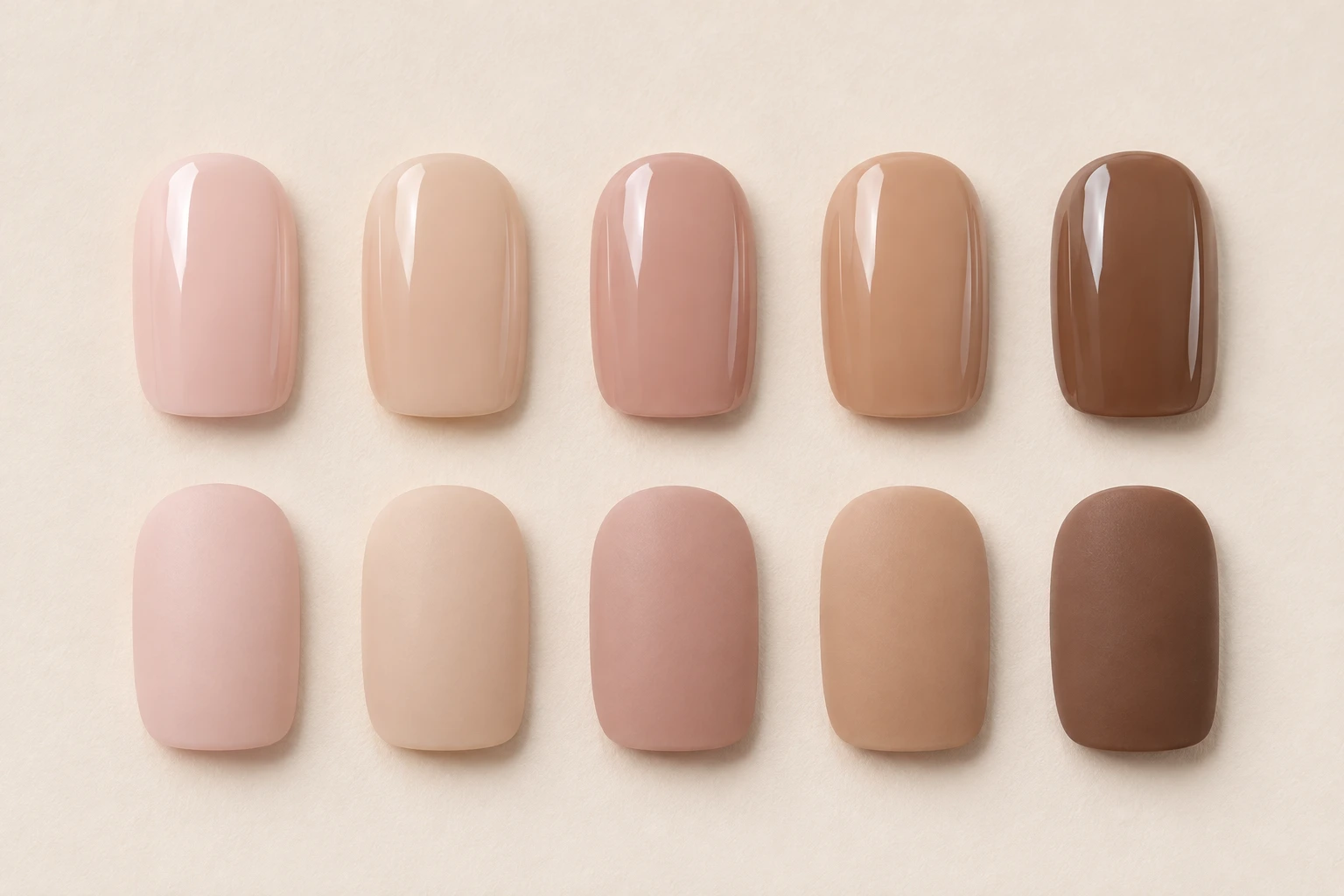
A nail color can look different by a window, under warm room lighting, and on your phone. The light reaching the nail, the direction of the reflection, and the way the camera and screen reproduce the scene all affect what you see. A small shift does not automatically mean the nail or the photograph is defective.
When a close color match matters, compare several views under ordinary lighting rather than choosing from one highly styled image.
Light is part of the color you see
Color and appearance depend on the material and the conditions in which it is viewed. NIST's overview of color and appearance measurement explains why controlled viewing conditions matter when evaluating a surface. NIST: Color and appearance
For a practical comparison, look at two nail colors together in the same place. Comparing a beige photographed in warm evening light with another beige photographed near a window mixes a color difference with a lighting difference. It is difficult to tell how much each contributes.
Warm light can change your impression
A soft pink may seem peachier under a warm lamp. A muted beige can look cooler beside a window than it did in the room. The exact result depends on the light and the finish, so do not use one example as a rule for every color.
If you wear your nails mainly at work, look at them under your usual indoor light as well as daylight. For an event, consider that setting too. You are choosing something you will see in several places, not a color that needs to look identical everywhere.
Shine changes with angle
On a glossy nail, a bright reflection can cover part of the underlying color. Rotate the hand slightly and the reflection moves. Chrome, shimmer, and cat-eye designs make angle especially important because a still frame captures only one part of their appearance.
Watch a slow movement video, if available, and pause away from the strongest glare. Look at the darker and lighter areas of the same nail. Those changing reflections help explain the finish, but they should not be mistaken for several different base colors.
Cameras make their own adjustments
A phone may adjust white balance and exposure automatically. Colored walls, clothing, or a warm background can affect the result. Filters and editing add further uncertainty, and different screens can display the same file differently.
A white object in the picture can offer a rough clue to a strong color cast, but it does not calibrate the image for you. If the background looks very yellow, the nail may also appear warmer than it would under a different light. Treat this as a reason to look for another view, not a way to calculate the exact true color.
A useful comparison routine
If you have physical samples, place them near the same fingers and photograph them together near a window without direct glare. Then check them under a room lamp. Keep the background, camera settings where possible, and distance consistent.
When shopping online, prioritize clear shade descriptions and multiple ordinary views. If two colors are very close, a screen may not settle the choice. Decide whether the difference matters enough to request a sample or accept a little variation in the finished look.