
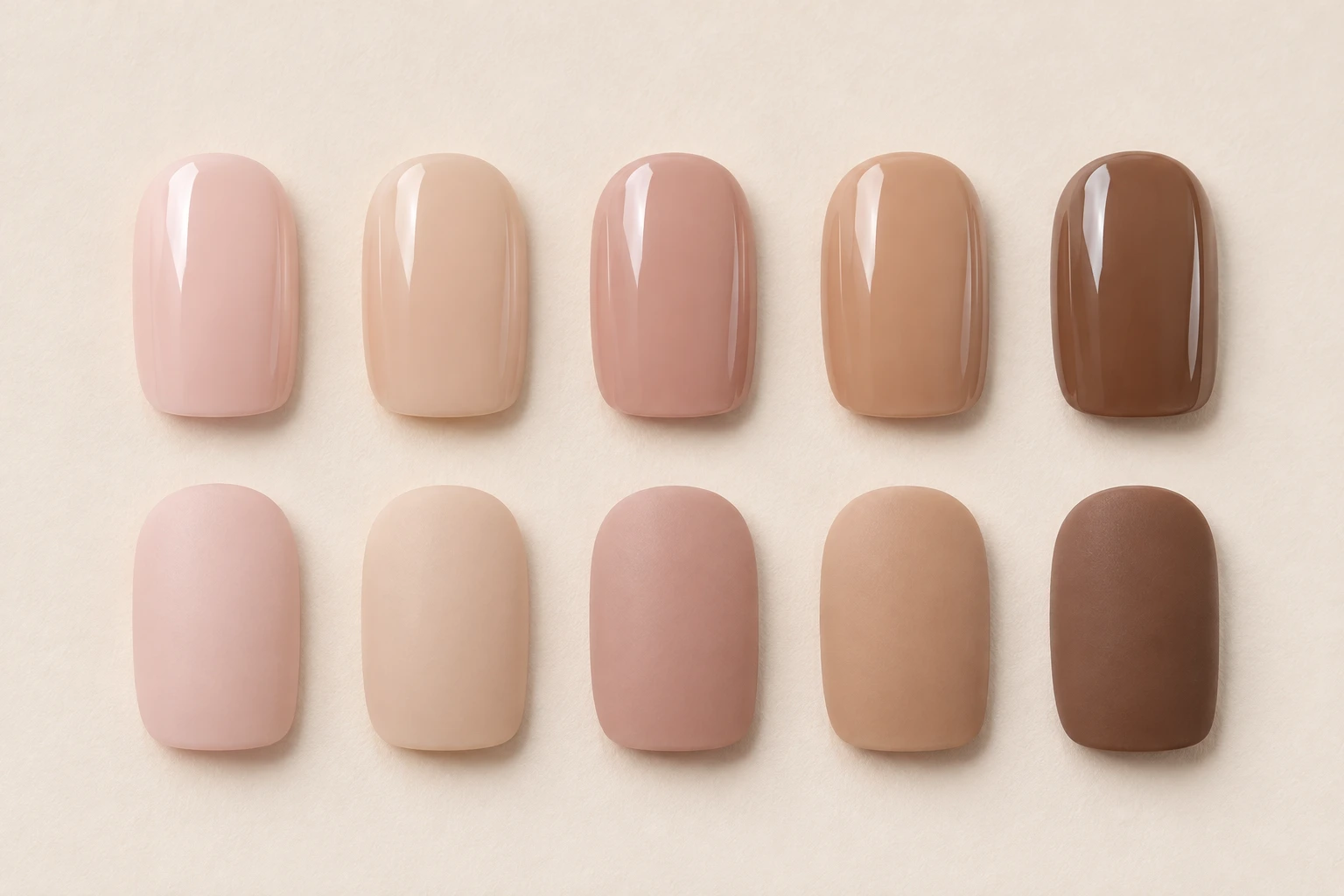
To mix nail colors, choose a small palette, decide where each color will go, and check that every chosen nail fits its finger. Planning the layout before opening the adhesive makes the process much easier. You can change an accent without disturbing an application that has already started.
A mixed manicure does not need every color to match perfectly. A repeated feature, such as a shared finish, similar depth, or one recurring accent, can give the set a sense of connection.
Pick an anchor color
Start with the color you most want to wear. Then decide what role the others should play. For a quiet mix, choose neighboring shades, such as pale pink, rose, and muted mauve. For a sharper contrast, pair your anchor with a clearly different light or dark color.
You can also begin with an outfit or accessory, but exact matching is optional. Pulling one color from a print is often easier than trying to reproduce every color in it. Check the nails beside the item in ordinary light before deciding.
Choose a layout you can describe
There are several straightforward options: one accent on each hand, a gradual change from light to dark, alternating two colors, or different colors on every finger. None is required for a balanced manicure.
Lay out two rows of five nails in the order you will wear them. View both rows together. If the overall effect feels too busy, repeat one color or remove one competing pattern. If it feels too uniform, move a contrasting shade to a more visible finger rather than adding several new colors.
Match fit before matching the pattern
If you are combining nails from different sets, a shared size number does not guarantee a shared width or curvature. Try each nail on the intended finger without adhesive. Check that it sits comfortably and covers the natural nail without pressing onto skin.
Do not use a poorly fitting nail just because its color completes the arrangement. Swap the color placement, choose another size, or change the plan. A design that looks good in a flat lay still needs to work on your hands.
Keep shape and length intentional
A long almond nail beside several short square nails can be a deliberate style choice, but the difference will be prominent. If you want the colors to be the focus, keep the shape and apparent length similar.
Check the side view as well as the top. Different sets may have different profiles, and one nail can project much farther beyond the fingertip than its neighbors. Only file or shorten a finished press-on where its instructions permit it; trimming can cut through artwork or leave an unsuitable edge.
Decide how much finish variation you want
Gloss and matte can make similar colors feel different. A chrome accent or a raised decoration introduces another visual feature. Try selecting either a color contrast or a strong finish contrast first, then add the other only if you enjoy the result.
The adhesive instructions still apply to every nail. Combining colors does not make different attachment systems interchangeable. Once your dry layout works, keep it in order beside you and apply according to the relevant directions. Save a quick photo of the arrangement if you want to recreate it later.