
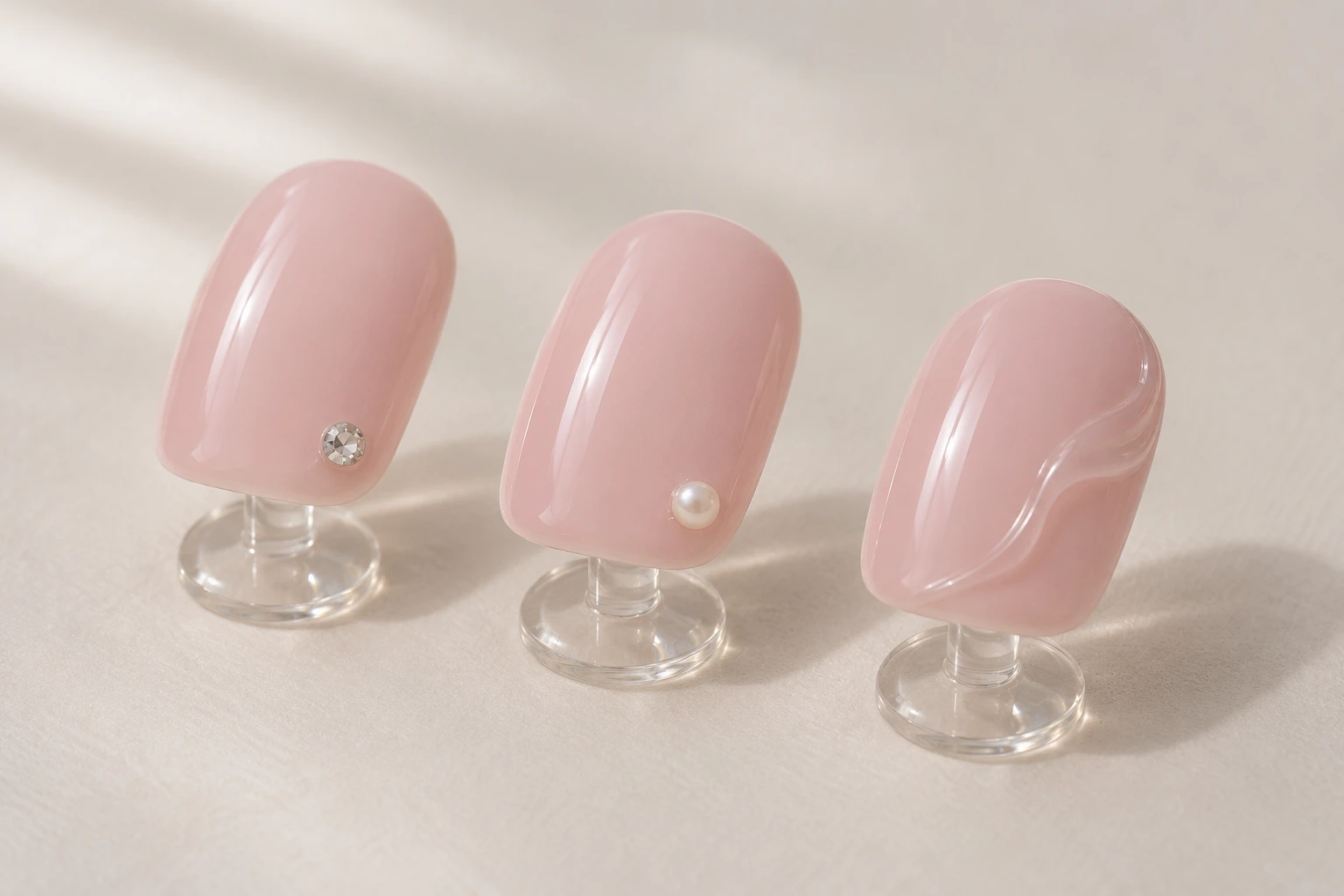
Rhinestone describes a sparkling decorative stone in common shopping language; it does not consistently identify one material. Nail gems may be described as glass, resin, crystal, or other substances. Ask for the stated composition if you need to know what a particular piece contains.
You can compare appearance from photographs, but a bright reflection is not a reliable material test. Lighting, the cut, surface coatings, and the background can all influence the sparkle you see.
Separate the shape from the substance
A clear ornament with flat facets may look gemstone-like whether it is glass or a polymer. GIA explains that imitation gem materials include glass and plastic, among other substances. Similar appearance does not mean identical composition or properties. GIA: Imitation gem materials
For nail shopping, useful details include the stated material, size, shape, and whether the back is flat or pointed. These describe different aspects of the piece. A flat-back gem can be made in more than one material, and a material name does not tell you its height on a finished nail.
What does crystal mean?
Crystal can be used loosely in decorative-product descriptions. It may refer to a sparkling look or to a particular glass product, rather than a natural mineral crystal. Do not assume diamond, quartz, or another gemstone unless the seller specifically identifies it and can support the claim.
The same care applies to diamond-like or jewel descriptions. They may explain the visual effect without making a precise composition statement. If the distinction affects price or your buying decision, ask a direct question about the material rather than inferring from the adjective.
Compare scale and edges
A tiny gem can provide a small flash; a larger faceted ornament creates a more prominent raised area. Check dimensions and a worn photo. A macro shot alone makes it difficult to judge how much space the ornament occupies on your finger.
Look at the perimeter and side profile. A component placed close to the sidewall or free edge can project beyond the nail even when its top view looks compact. The finished arrangement matters alongside the individual gem's shape.
Material does not prove attachment quality
An expensive stone can still be attached poorly. A less costly ornament can still be used neatly in a suitable design. You cannot rank the strength of a finished nail solely from glass versus resin wording.
Inspect for an obvious gap, a tilted piece, or movement during normal gentle handling before application. Do not pry at the gem to see how much force it withstands. If the piece is loose, set the nail aside and contact the supplier instead of turning it into a repair experiment.
Avoid destructive identification tests
Do not use flame, heated tools, scratching, strong solvents, or improvised chemical tests to identify a gem on a nail. Even if one component survives, the coating, adhesive, and press-on shell may not.
For routine care, follow the finished nail's instructions. Gemstone advice written for a loose stone or a metal jewelry setting may not suit a decorated press-on. If the material remains unspecified, treat it as unspecified and choose based on the documented design and care information you do have.