
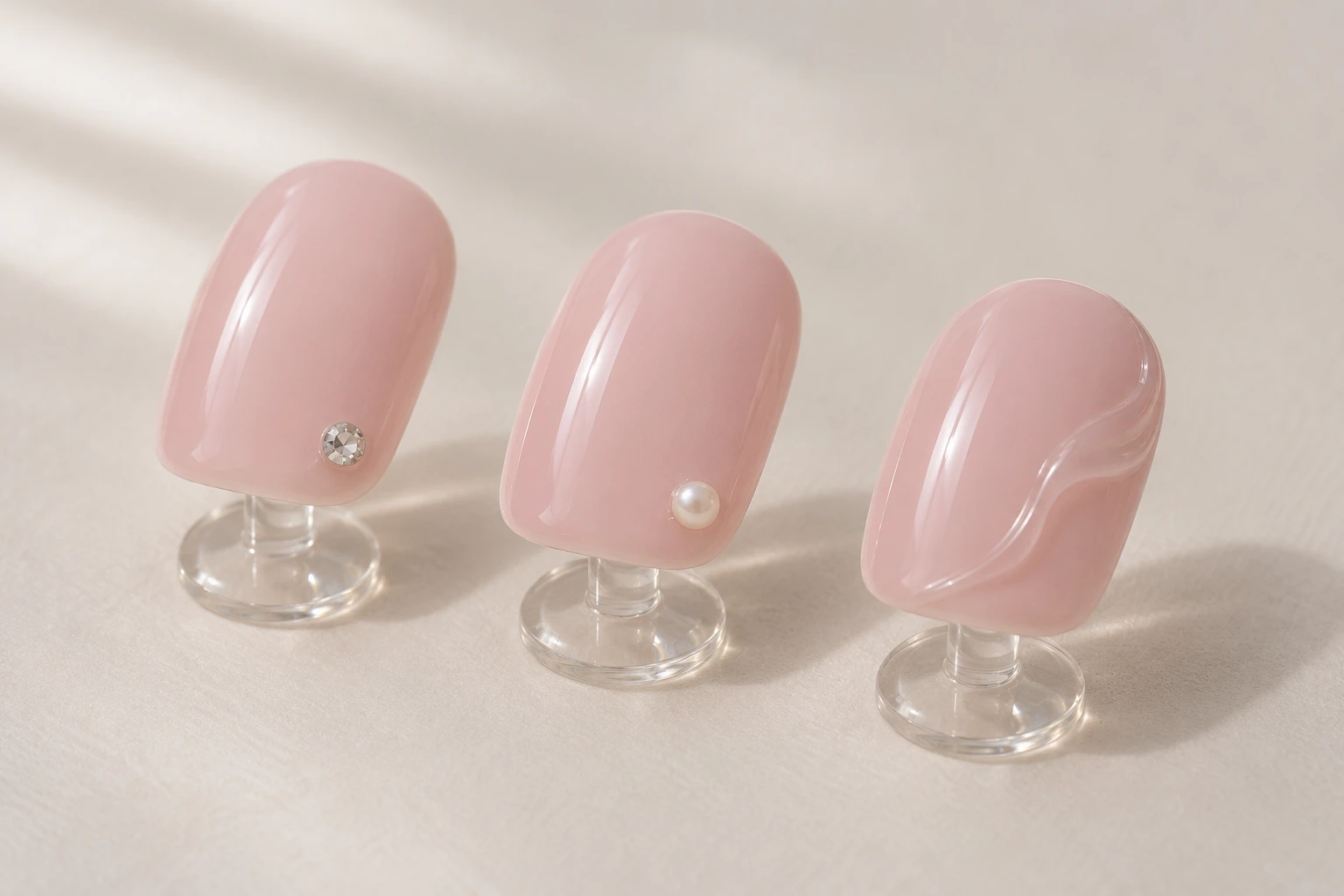
A sculpted nail detail is shaped into a raised form as part of the decoration process. An attached decoration begins as a separate piece and is secured to the nail. Both can create three-dimensional artwork, and a finished design may combine them.
The distinction helps describe construction, but it is not a simple quality ranking. A smooth sculpted flower can be damaged, and a separately attached ornament can be suitable for its intended use. The materials and finished workmanship still matter.
What you can see in a close-up
A sculpted ripple or raised line often follows the nail surface continuously. A separate gem, bead, or charm may show a distinct boundary at its base. Look from the side as well as the top to see how the shape meets the nail.
A photograph will not always settle the question. Clear coatings can conceal boundaries, and a molded piece can look similar to a detail formed directly on the nail. If construction matters to your purchase, ask rather than treating a visual clue as proof.
Similar shapes can use different methods
A bow might be painted flat, shaped from a nail-art product, or added as a ready-made ornament. A flower can be made as one piece or assembled from several petals. The design name describes the subject; it does not identify the manufacturing method.
Words such as handmade, sculpted, or 3D also leave details unanswered. Ask which part is shaped by hand, what rises above the surface, and whether the displayed version is the one included in your selected set. These are more useful questions than assuming one label explains the whole nail.
Compare height and projection
The part most relevant to daily use may be the profile rather than the construction category. A low raised texture can occupy a large area without extending far outward. A small charm can have a projecting corner or loop.
Study the edges near the sidewall and free edge. Think about the tasks you do with that finger. Keep the comparison specific: a smooth low ripple versus a tall bow, for example, rather than sculpted versus attached as a universal choice.
Finished does not mean ready for extra curing
A raised clear detail on a finished press-on does not mean you should add a gel top coat or place it under a lamp. You do not know its material or compatibility from its appearance. The set may already be fully finished and intended only for attachment with its specified adhesive.
Adding a coating can cover fine details, change the surface, or create a new curing requirement. Follow the instructions for the complete nail instead of borrowing a repair step from a different nail-art system.
Inspect without stressing the design
Check for cracks, lifted edges, rough points, or a separate piece that moves during gentle ordinary handling. Do not bend a sculpted detail or pry at an attached ornament to compare strength. That can create the damage you are trying to detect.
If a detail appears loose or broken, keep the nail off your hand and ask for a replacement or product-specific advice. For a new purchase, request a clear side photo and a description of the raised elements. Together, those provide a more useful picture than a construction label alone.